Peak Design Slide Lite Review
The short version: After a full field test — including three weeks in Patagonia — the Peak Design Slide Lite earns its place in my landscape kit. It lets me snap the strap off in seconds when the camera goes on a tripod, then click it back on when I move. Solid build, genuinely quick to detach, one small flaw (it can twist on itself). For photographers who switch between handheld and tripod all day, it's worth the ~$80. Not sponsored — I bought it myself.
Why I finally bought a "proper" camera strap
I've always leaned toward gear minimalism. I want my tools to work and then disappear — not distract me — so for years I avoided gadgety upgrades unless they earned their place with a clear, tangible benefit.
That changed as my shooting did. As camera bodies got better stabilisation and noise-reduction software made handheld work more viable, I moved away from being tripod-only and started shooting a lot more handheld. The spontaneity was refreshing.
But that created a specific problem in the field. In landscape photography I'm constantly bouncing between two states: moving — where I want the camera on a strap, in reach, secure while I scramble over rocks — and shooting from a tripod, where I want no strap at all catching the wind. With a normal strap, that means constantly threading it on and off. That friction is exactly what you don't need when the light is changing.
That's the problem the Peak Design Slide Lite is built to solve.

It´s great to have the camera always in reach while hiking, that´s why i like to have my camera on a camera strap when i move for landscape photography…
What makes the Slide Lite stand out
Before a trip to Patagonia I asked my followers on Instagram what strap I should try. The answer came back loud and clear: get a Peak Design. So I picked up the Slide Lite and committed to a proper real-world test rather than a desk review.
Here's what works exceptionally well:
Seamless detach and reattach. This is the whole point, and it delivers. Within seconds I can pop the strap off when the camera's tripod-mounted, then click it back on when I'm ready to roam. It sounds minor; in the field it removes a genuine daily annoyance.
Build quality you can trust. The strap uses metal Dual Quick-Adjusters for length changes and a grippy rubberised section that holds on your shoulder or clothing. The connectors — Peak Design's Anchor Links — snap on with real confidence. Peak Design rates each anchor to hold well over 90 kg, and in practice it never once gave me a reason to worry, even with a heavy body and lens.
It feels premium. Aesthetics and tactile feel are consistent and considered. When you're carrying expensive gear over rough ground, that sense of security is worth something real.
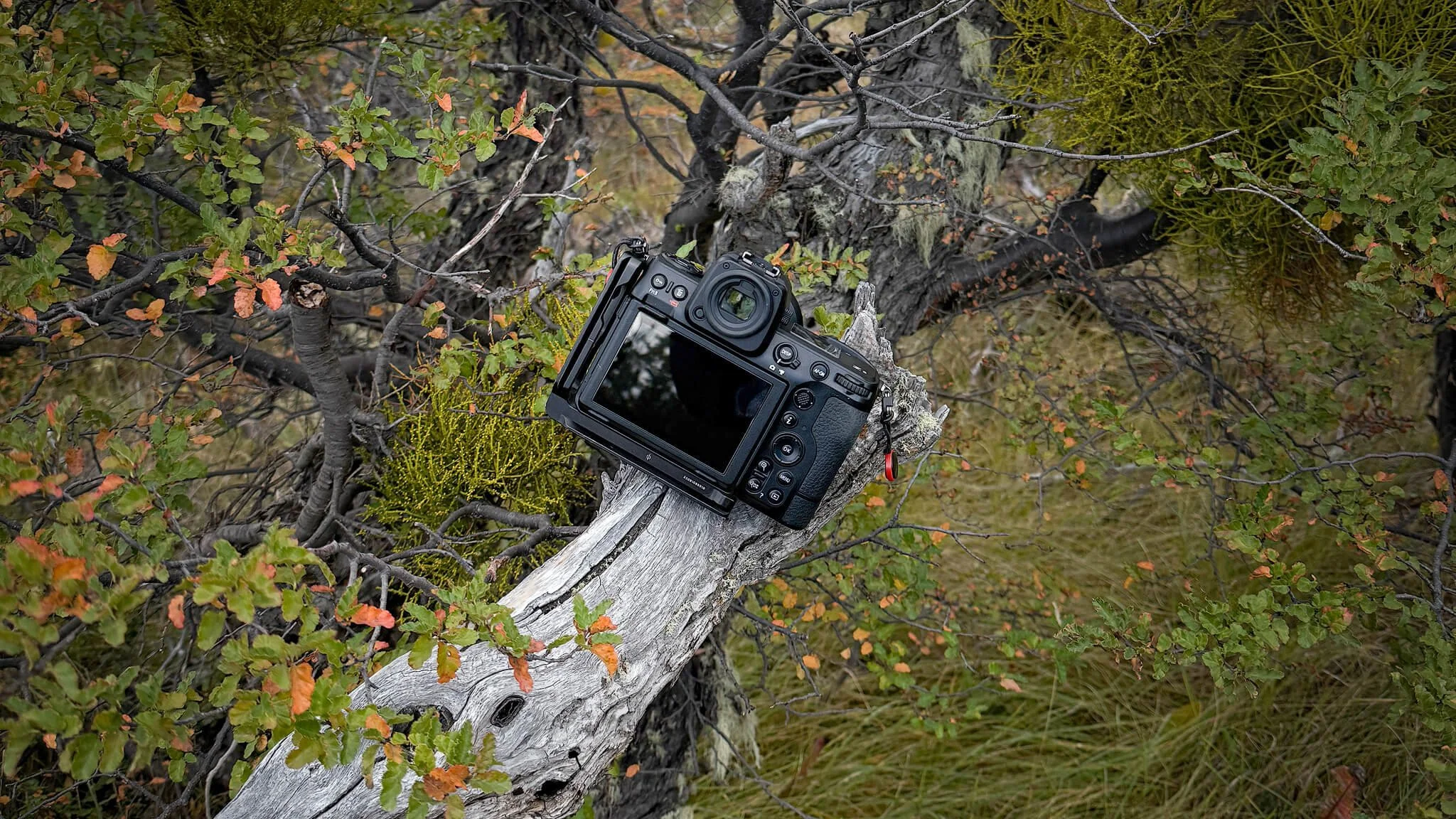
My Nikon Z8 chilling out in a beautiful tree during autumn in Torres del Paine National Park in Chile, ready to get strapped on in a breeze if needed…
The one weakness
If I have to name a flaw, it's this: the strap can occasionally twist or wrap on itself. When that happens you stop, unclip, untwist and reattach — a mild annoyance rather than a real problem. A small rotating joint at the connector would likely eliminate it, and I've noticed some competitor straps now offer exactly that kind of swivel.
I still chose the original Peak Design system over cheaper alternatives, because its build quality and reliability inspire confidence I wasn't willing to gamble on. For me that ~$80 didn't just buy a strap — it bought peace of mind carrying expensive gear in remote places. If Peak Design ever releases a version with a swivel, I'd upgrade happily.
Is the Peak Design Slide Lite right for you?
Buy it if you regularly switch between handheld and tripod shooting, hike or move with your camera, or carry a heavier body-and-lens combination and want a strap you can genuinely trust — and detach in seconds.
You can probably skip it if you shoot almost entirely from a tripod and rarely carry the camera by strap, or if you're happy with a basic strap and don't mind threading it on and off. It's a quality-of-life upgrade, not a miracle — and that's an honest reason some people won't need it.
Slide Lite vs Slide: the Slide Lite is the slimmer, lighter version, sized for mirrorless bodies and lighter setups (like my Nikon Z8). The standard Slide is wider and built for heavier DSLR rigs. For most landscape mirrorless shooters, the Lite is the right one.
Final verdict
The Peak Design Slide Lite earns its place in my kit. It removes friction, speeds up the transitions I make dozens of times a day, and feels genuinely solid in the hand. The occasional twist is a small thing against how much smoother it makes moving through a shoot. For photographers who switch between handheld and tripod regularly, it's a worthy upgrade.
This is not a sponsored article. I bought the product myself and have no cooperation with Peak Design at the time of writing.
FAQ
Is the Peak Design Slide Lite good for heavy cameras? Yes. Peak Design rates each Anchor Link connector to hold well over 90 kg, and in my field use it handled a Nikon Z8 without concern — even with a big, heavy lens like the Nikkor Z 180-600mm f/5.6-6.3 VR mounted. For very heavy DSLR-and-telephoto rigs, the wider standard Slide may be more comfortable, but the Lite is well within its limits for mirrorless setups.
What's the difference between the Slide Lite and the Slide? The Slide Lite is slimmer and lighter, aimed at mirrorless and lighter setups. The standard Slide is wider and made for heavier DSLR rigs. Most landscape photographers on mirrorless will prefer the Lite.
Is the Slide Lite good for landscape photography and hiking? It's very good for it. The quick-detach system means you can carry the camera securely on the move, then remove the strap in seconds when you mount the tripod — which is exactly the workflow most landscape photographers need.
Does the Peak Design Slide Lite have any downsides? The main one is that the strap can occasionally twist on itself, requiring a quick untwist. It's a minor annoyance rather than a real flaw, and the build quality otherwise is excellent.
Is the Peak Design Slide Lite worth the price? For photographers who regularly switch between handheld and tripod shooting, yes — the quick-detach system removes real daily friction and the build quality inspires confidence with expensive gear. If you shoot almost entirely from a tripod, it's less essential.
Gear helps you get the shot; knowing what to do when you're there is what makes it. Grab the free framework I run through before pressing the shutter on any landscape.
Keep going
Sorting out the rest of your kit? See my camera guide and lens guide for landscape photography. And to see the gear in the field, read my Faroe Islands photography guide and Lofoten winter guide.