Faroe Islands Photography Guide
I first heard of the Faroe Islands more than twenty five years ago — their tiny football team was playing Germany, and the name stuck in my head. It then took me another fifteen years to actually get there. In 2015 I made my first photography trip to the Faroes with a good friend, in April, and I fell in love almost immediately. I've been back close to ten times since, in every season.
What pulls me back is hard to put in one sentence. The islands feel like Norway and Iceland had a child — and a bit like what I imagine Scotland to be, though I've never been. The sheer scale of the cliffs, the raw landscapes, the brutal weather: it all adds up to one of the most dramatic places I've ever pointed a camera. And there's a quiet here you don't find in more developed destinations — tourism is still relatively undeveloped, so you can stand at a world-class viewpoint and actually be alone with it.
This is my honest, first-hand guide to photographing the Faroe Islands: where to shoot, what each place is really like, how to handle the weather, how to get around, and how to stay safe on cliffs that genuinely demand your respect.
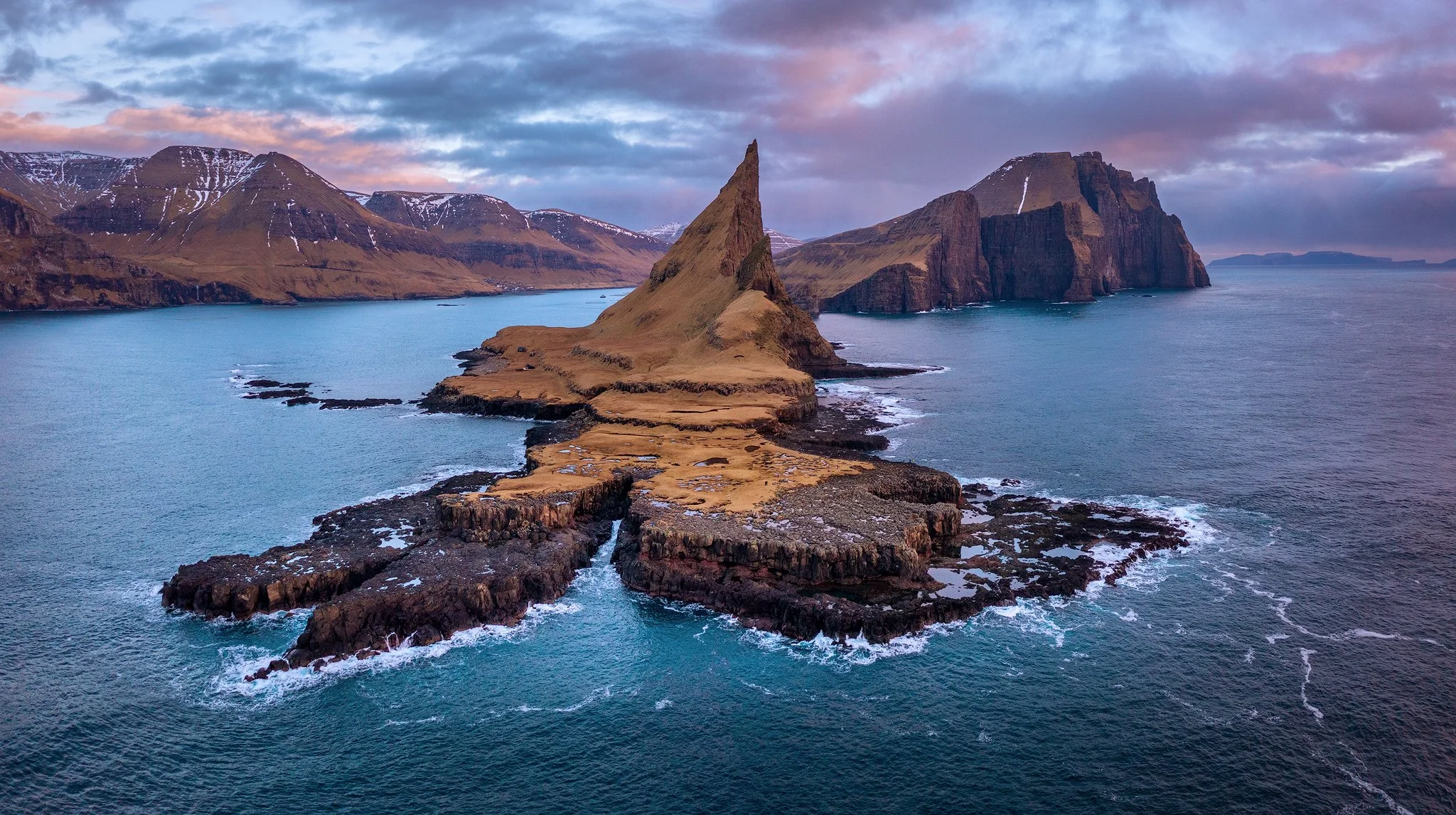
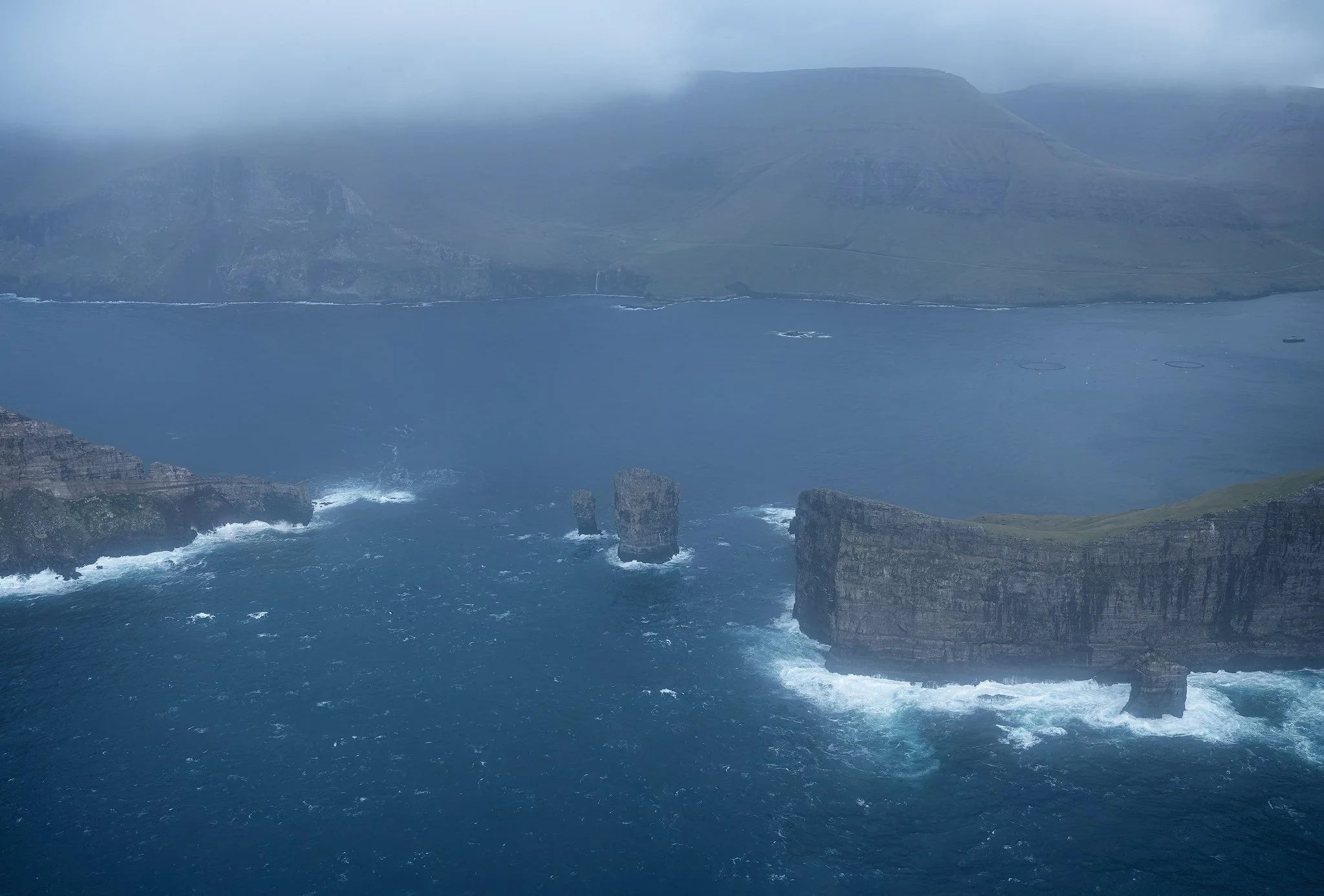
Aerial view towards Tindhólmur with the amazing cliffs of Vágar behind. Quintessential Faroe Islands.
Want a simple tool to get stronger compositions on the spot? Grab my free Field Method — the four checks I run before pressing the shutter on any landscape, including every frame in this guide.
The locations
A note before the list: these are the well-known, accessible icons — the places that make the Faroes famous and that most photographers come to shoot. The Faroes reward exploration, and some of my favourite spots I keep for the people who travel with me. But you can build an extraordinary trip from the locations below alone.
Tindhólmur
The dramatic, jagged islet off the west coast — for me one of the most striking shapes in the whole archipelago. The beauty of Tindhólmur is that you can shoot it from many angles: from the village of Bøur across the water, from the Drangarnir side, from various points along the shoreline, and from the air with a drone. You can also land on Tindhólmur, but it's privately owned and the owners rarely permit access — I've been on it a few times and it's fantastic, but don't count on getting out there.
Best light: sunset and side light from the west; moody storm light suits its silhouette. Lenses: 24–70mm / 24–120mm for the classic framing; 70–200mm to isolate it across the water; 14–24mm if you have strong foreground from the shore.
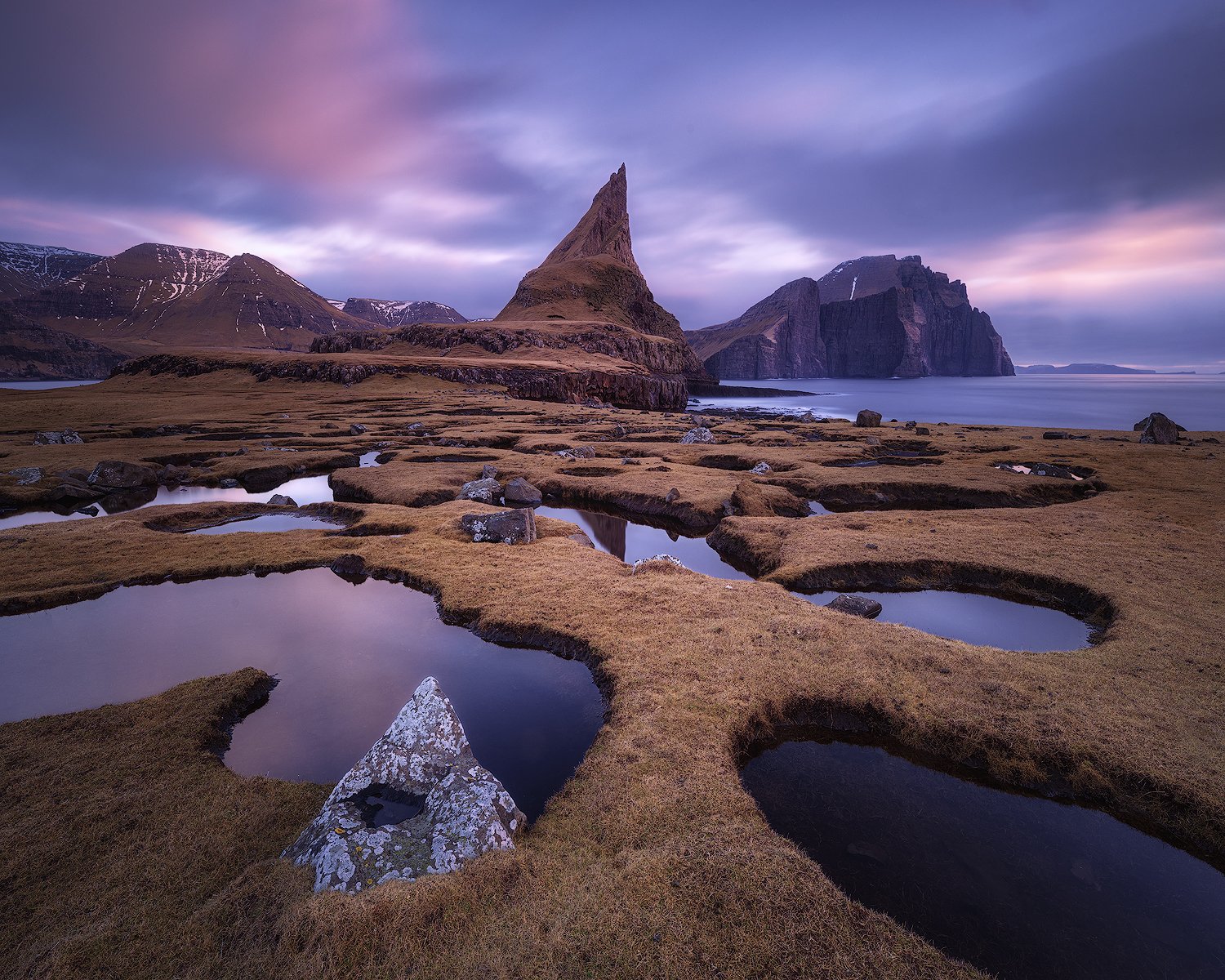
A view few people get to see- the tip of Tindhólmur with the many reflective pools
Gásadalur & Múlafossur
The big classic — the waterfall of Múlafossur dropping straight into the ocean below the village of Gásadalur, with peaks behind. It's the postcard shot of the Faroes, and for good reason.
One important, very current note: the cliffside at the main viewpoint partially collapsed this year. Where twenty people could once stand to shoot the best composition, now maybe five can fit. Few people know this yet — so arrive expecting far less room, be patient, take turns, and do not crowd or push toward the new edge. It's smaller and less predictable than the photos online suggest.
Best light: sunrise and sunset both work; this is a place where dramatic, stormy light is the whole point. Lenses: 16–35mm for the classic wide; 24–70mm / 24–120mm for tighter framing.
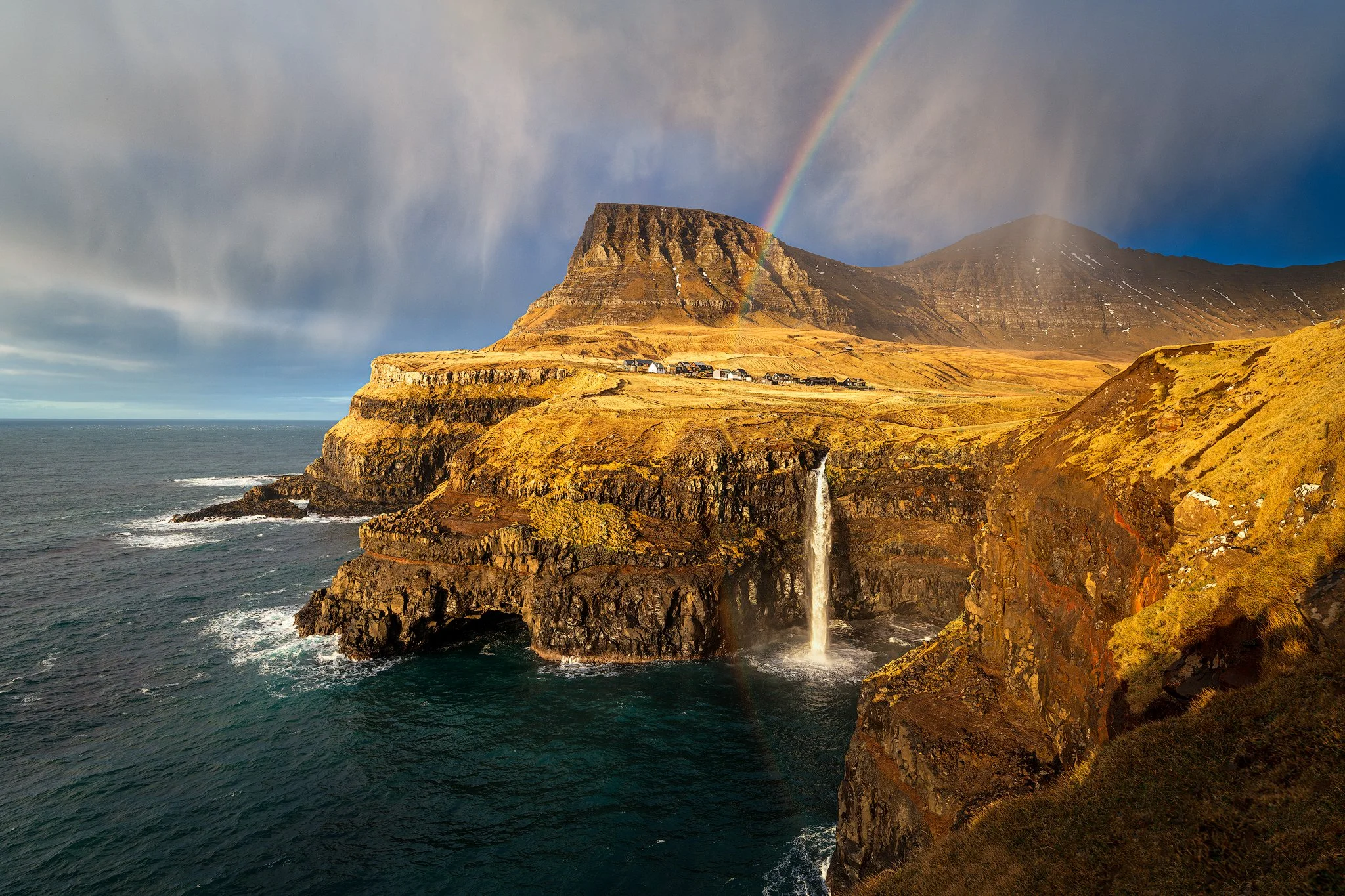
Where there´s rain, there could be rainbows… so the Faroe Islands are a great place to chase rainbows!
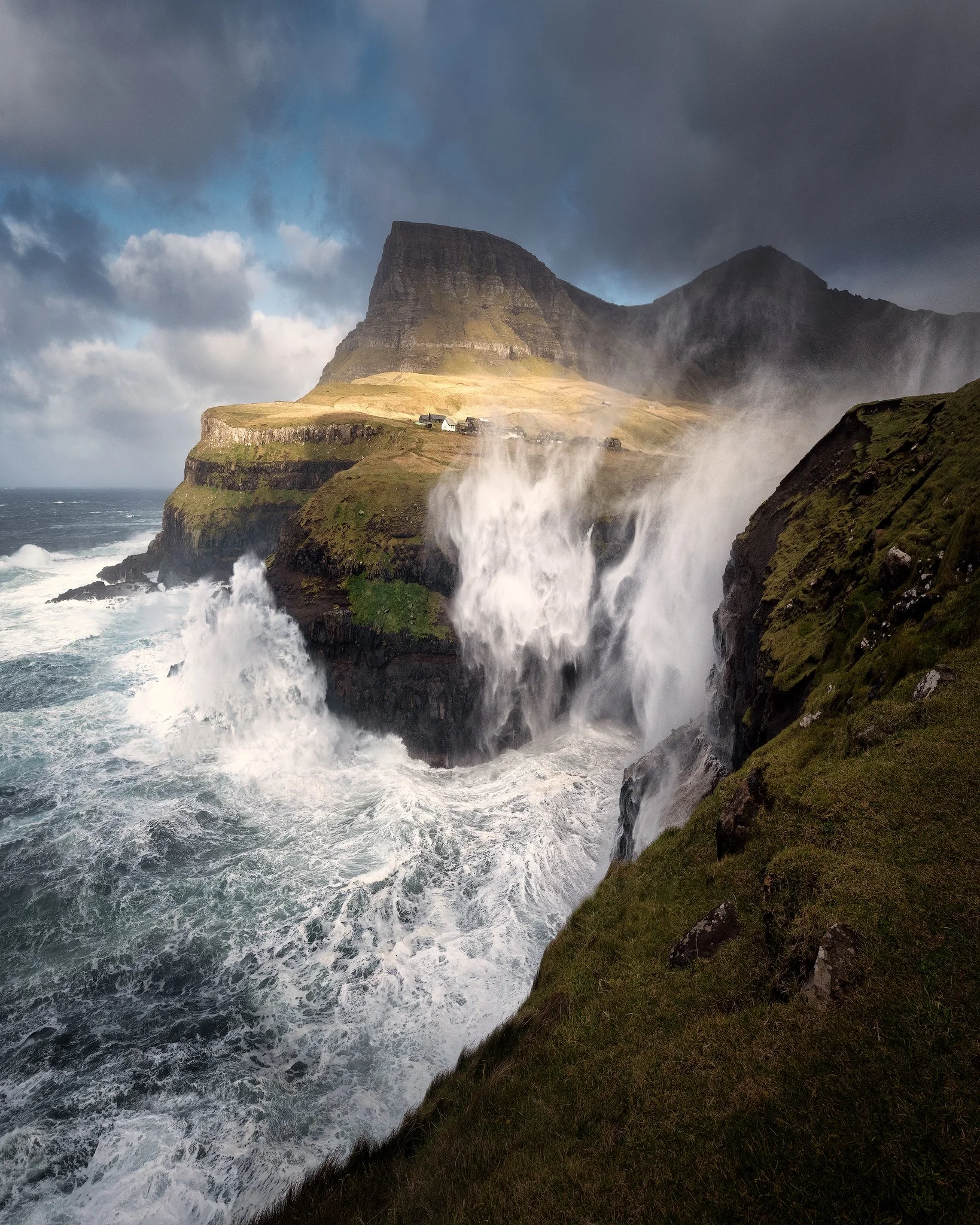
Waterproof layers and a lot of lens clothes to wipe your camera dry come handy on these stormy days!
Want to see it in motion? I filmed Múlafossur after shooting the picture above — watch the reel on Instagram.
Drangarnir
The iconic sea stacks with the natural arch, framed perfectly by Tindhólmur beyond. One of the most photogenic spots in the North Atlantic — and one of the harder ones to reach.
Access has rules, and they change, so research the current situation before you go. As it stands, the hike to Drangarnir crosses private land and requires a paid local guide. Alternatively, operators run Zodiac/boat trips out to it (companies like Bluegate and similar) for a fairly steep fee — but that saves the hike and gives you a sea-level angle. Either way, budget for it and book ahead.
Best light: sunset; the arch and stacks read beautifully against low side light. Lenses: 24–70mm / 24–120mm; 70–200mm for compression from the boat.
Trælanípa & Sørvágsvatn (the "floating lake")
The famous optical illusion: the lake Sørvágsvatn (Leitisvatn) that appears to hang high above the ocean, seen from the cliff of Trælanípa (the "slave cliff"). A moderate hike gets you there, and the payoff is one of the most surreal compositions in the islands. From the same area you can also shoot Bøsdalafossur — the waterfall where the lake spills over the cliff straight into the Atlantic — so it's two strong subjects from one walk. And there´s even the epic sea stack Geituskorardrangur… bring enough batteries and extra memory cards!
This is also one of the most exposed and dangerous viewpoints in this guide — you're standing right at a precipice. Read the cliff-safety section below before you go, and take it seriously.
Best light: the scene works in many conditions; dramatic skies elevate it. Lenses: 14–24mm / 16–35mm for the sweeping illusion; 24–70mm for tighter framing; 70–200mm to isolate Bøsdalafossur.
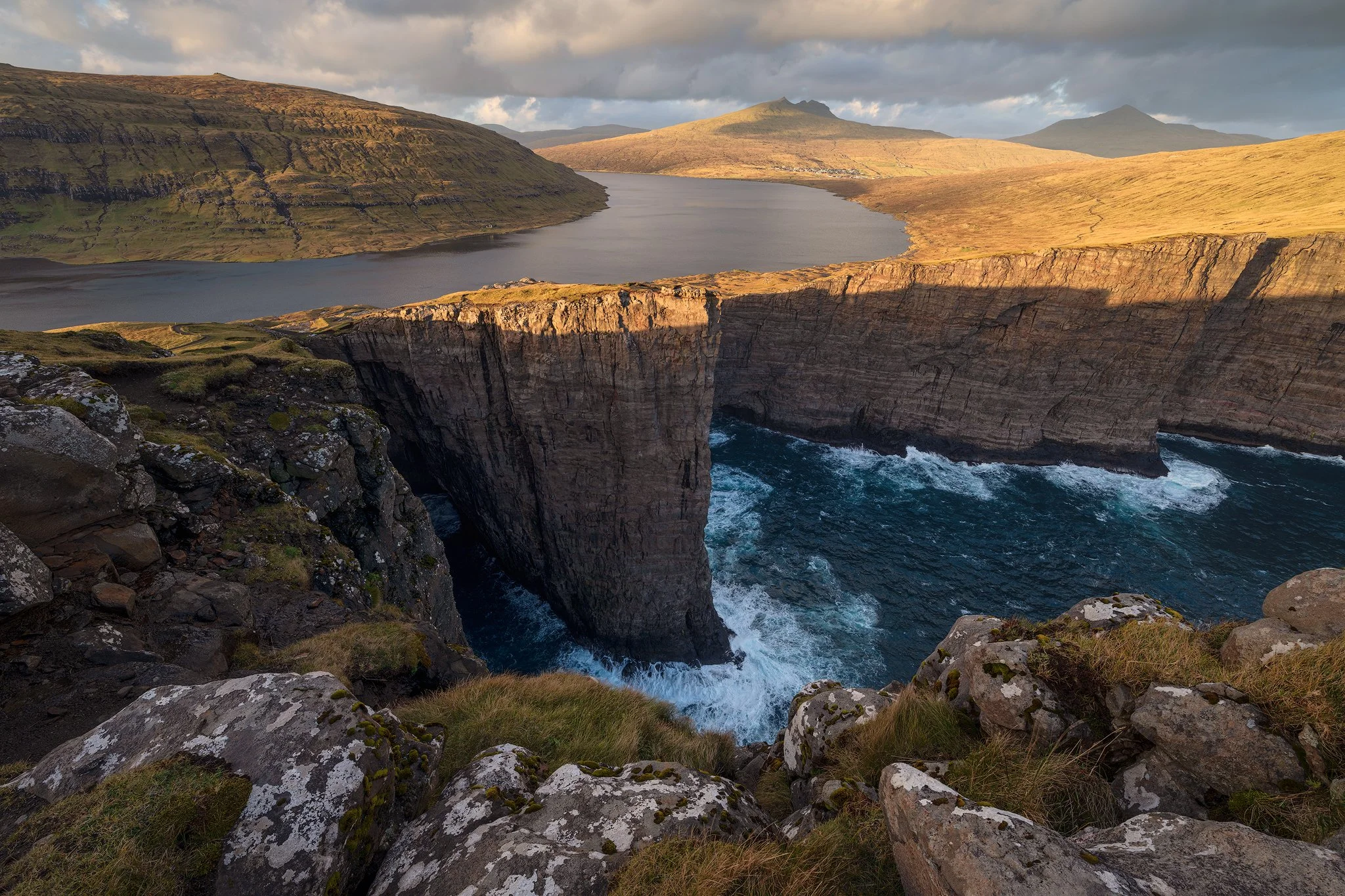
The view from the slave cliff Traelanípa towards Leitisvatn from the viewpoint “the lake above the sea”. Be careful here!
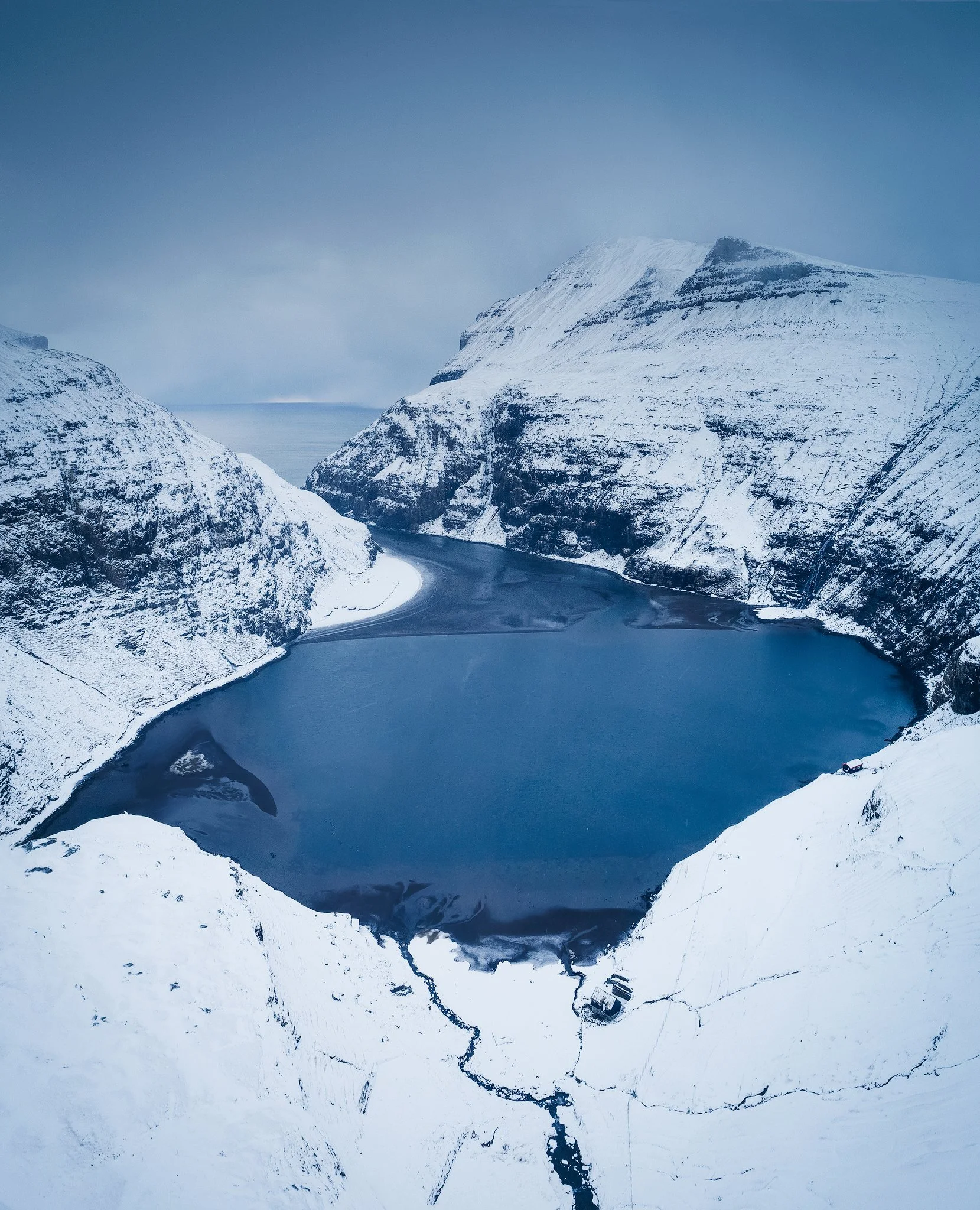
Saksun
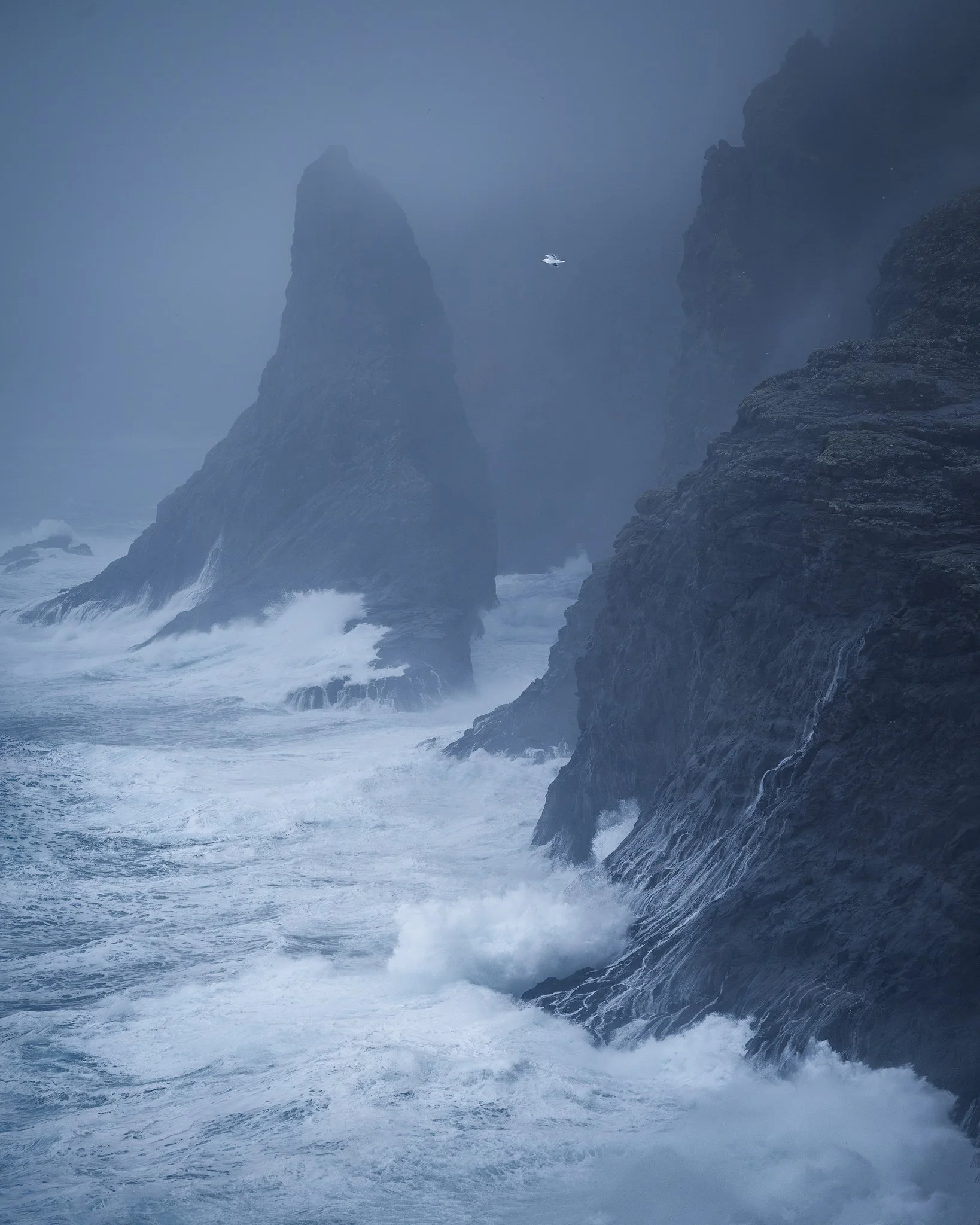
A beautiful, almost mythical village in a natural amphitheatre, with a tidal lagoon and the famous turf-roofed church. I'll be honest: I have mixed feelings about Saksun now — the landowner has fenced much of it off and charges a high fee, which has changed the experience. But it remains a genuinely beautiful place and belongs on any list. My best images from here are all from winter, when the setting is at its most atmospheric.
Best light: soft light, moody overcast, winter atmosphere, sunset. Lenses: 16–35mm for the environment; 24–70mm / 24–120mm for the church and lagoon.
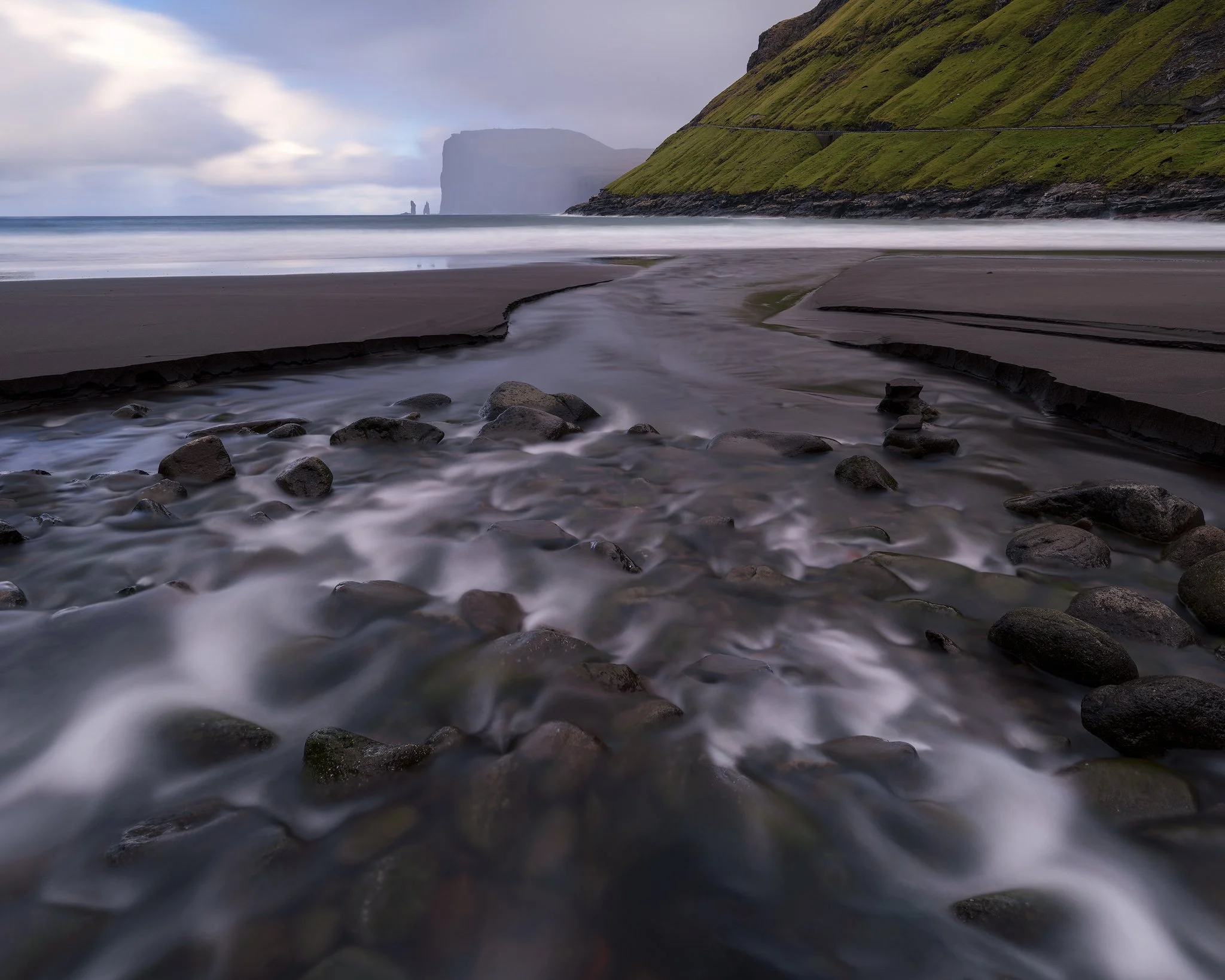
Tjørnuvík
A fantastic spot for seascapes, looking out to the sea stacks Risin og Kellingin (the Giant and the Witch). The black-sand beach and the framing of the stacks make this a rewarding place to work waves, motion and mood.
Best light: sunrise, sunset and storm breaks; long exposures for the wave motion. Lenses: 16–35mm / 24–70mm; 70–200mm to isolate the stacks.
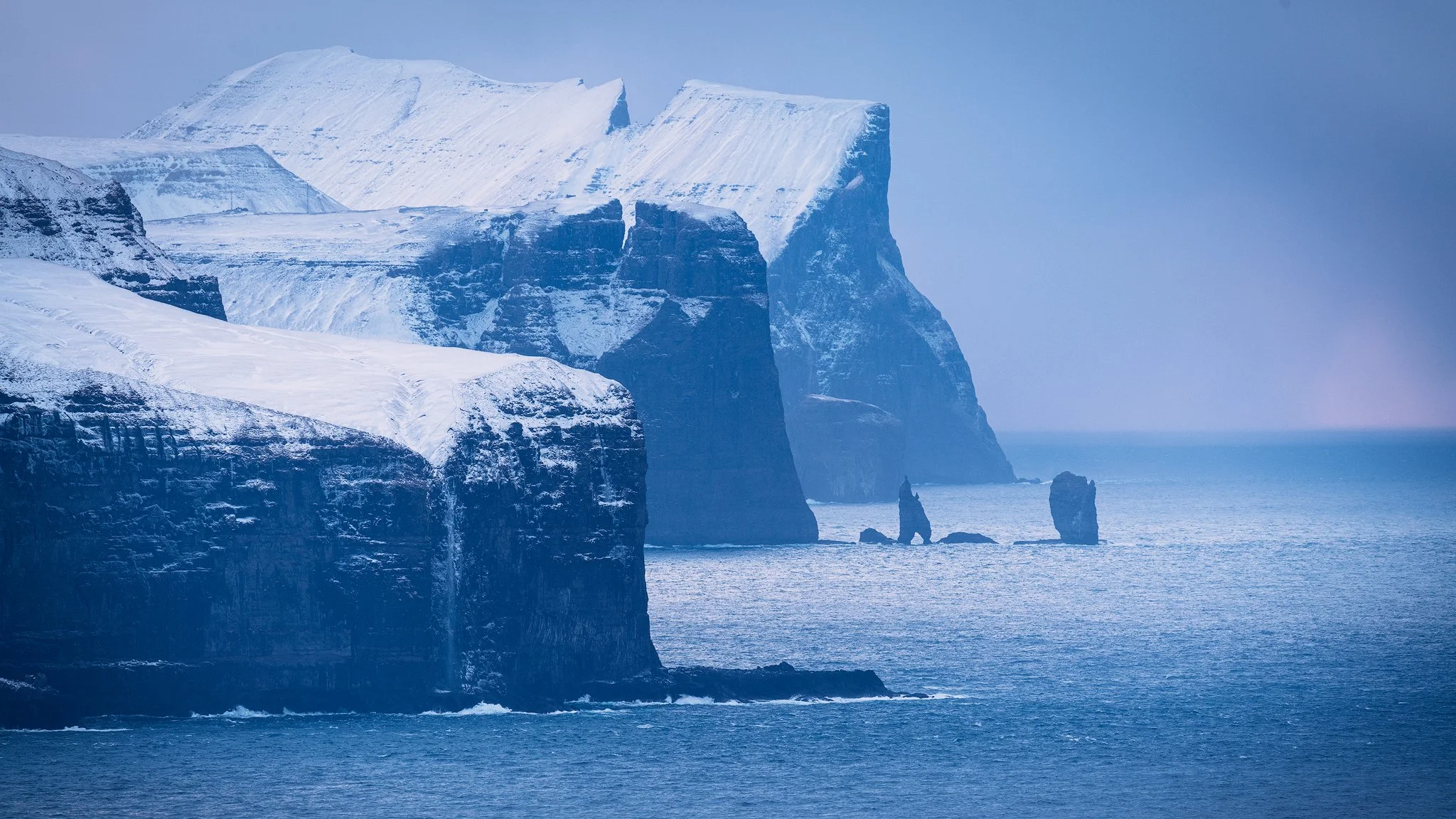
Kallur Lighthouse, Kalsoy
One of the most spectacular spots in the Faroes — the little lighthouse perched on a ridge at the north of the island of Kalsoy, reached by a roughly 40-minute hike from the village of Trøllanes. The views are extraordinary in every direction.
A standout composition from here: you can shoot Risin og Kellingin from over 16 kilometres away with a telephoto — distance compresses the stacks and the headlands into layered, painterly frames. It's a perfect example of how a long lens finds compositions a wide angle never could.
Best light: the ridge works for sunrise and sunset depending on conditions; golden light on the headlands is magic. Lenses: 24–70mm for the lighthouse-and-ridge classic; 70–200mm / 100–400mm for the distant sea-stack compression.
Hvíthamar (above Funningur)
A short, easy walk above the village of Funningur brings you to Hvíthamar — one of the most rewarding viewpoints in the islands for relatively little effort. From the ridge you look down over the fjord and across to dramatic peaks, and in the right conditions the whole valley fills with god rays after a passing storm. It's a classic sunset spot, and on a good evening the light here is extraordinary.
Watch for sheep on the road as you drive up toward Funningur — they're everywhere around here (more on that below).
Best light: sunset; god rays through broken cloud after rain. Lenses: 16–35mm / 24–70mm for the sweeping valley; 24–120mm for tighter ridge-and-light compositions.
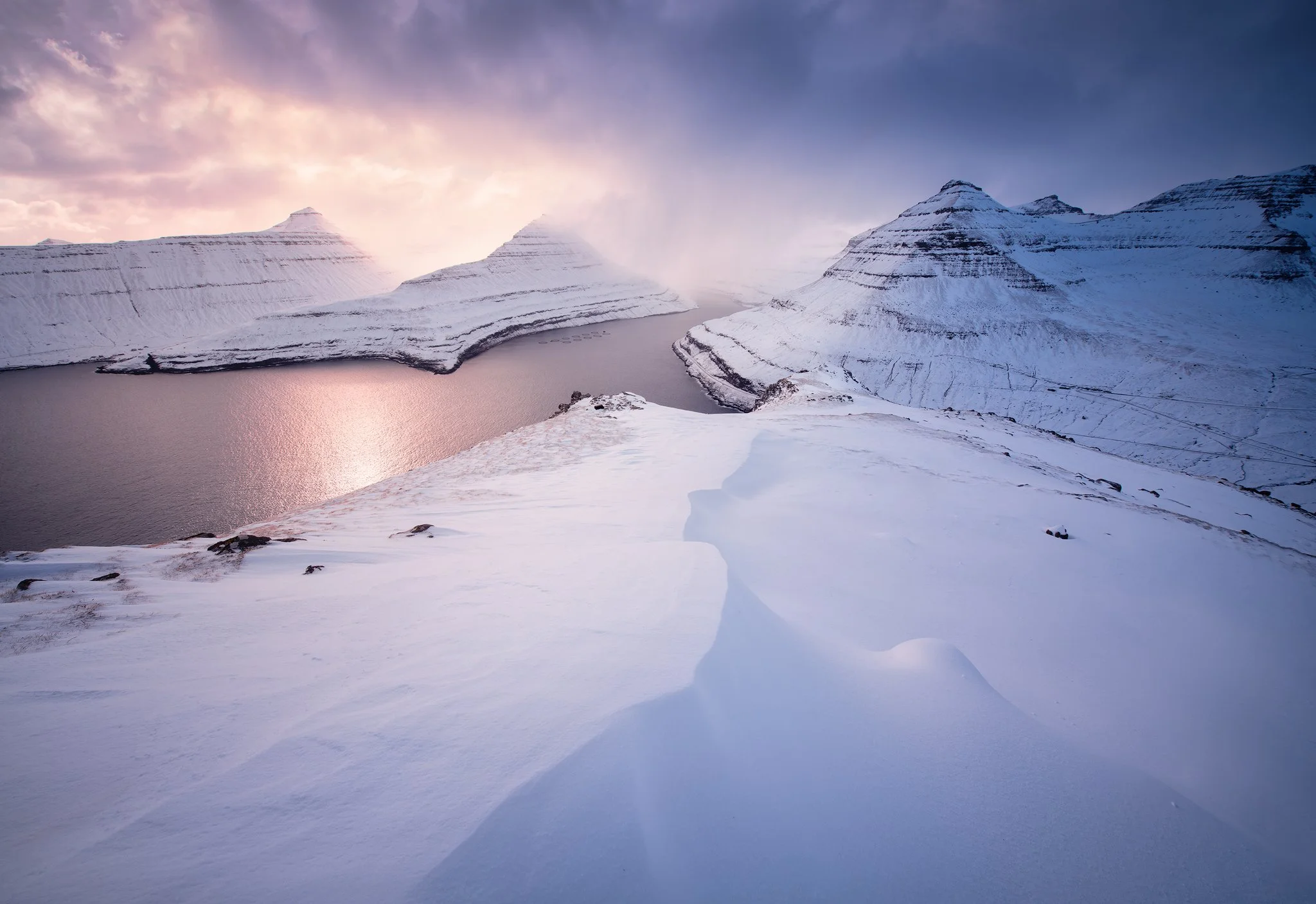
One of my favorite views in the world completely covered in snow… still one of my best landscape photography memories!
Viðareiði
The northernmost village you can reach by road, with its church and the surrounding peaks and coastline. A quieter stop, but a beautiful one, and worth the drive north for the scenery and the sense of reaching the edge of the islands.
Best light: dramatic skies and side light on the peaks. Lenses: 16–35mm / 24–70mm; 70–200mm for the headlands.
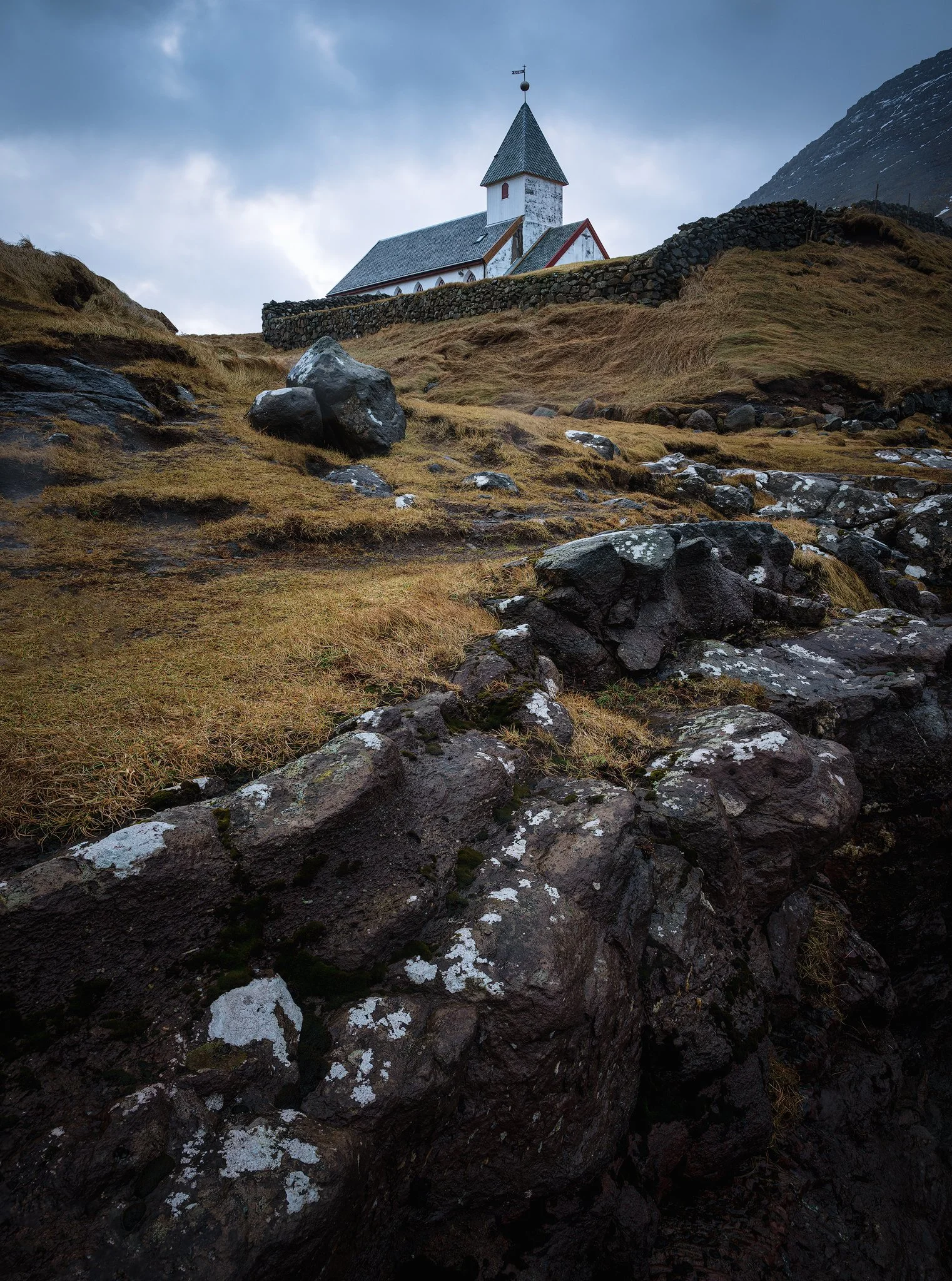
Sornfelli
The old radar station up on one of the higher points, reachable by road. It's not a secret, so it's worth including — but with a caveat: it's a gamble. Most of the time it sits up in the low clouds and you'll see nothing. But when it's clear, the elevated view across the islands is wonderful. Check the cloud base, and treat a good day up here as a bonus rather than a plan.
Best light: whenever the clouds lift; sunset if you're lucky. Lenses: 24–70mm / 24–120mm; 70–200mm for distant ridgelines.
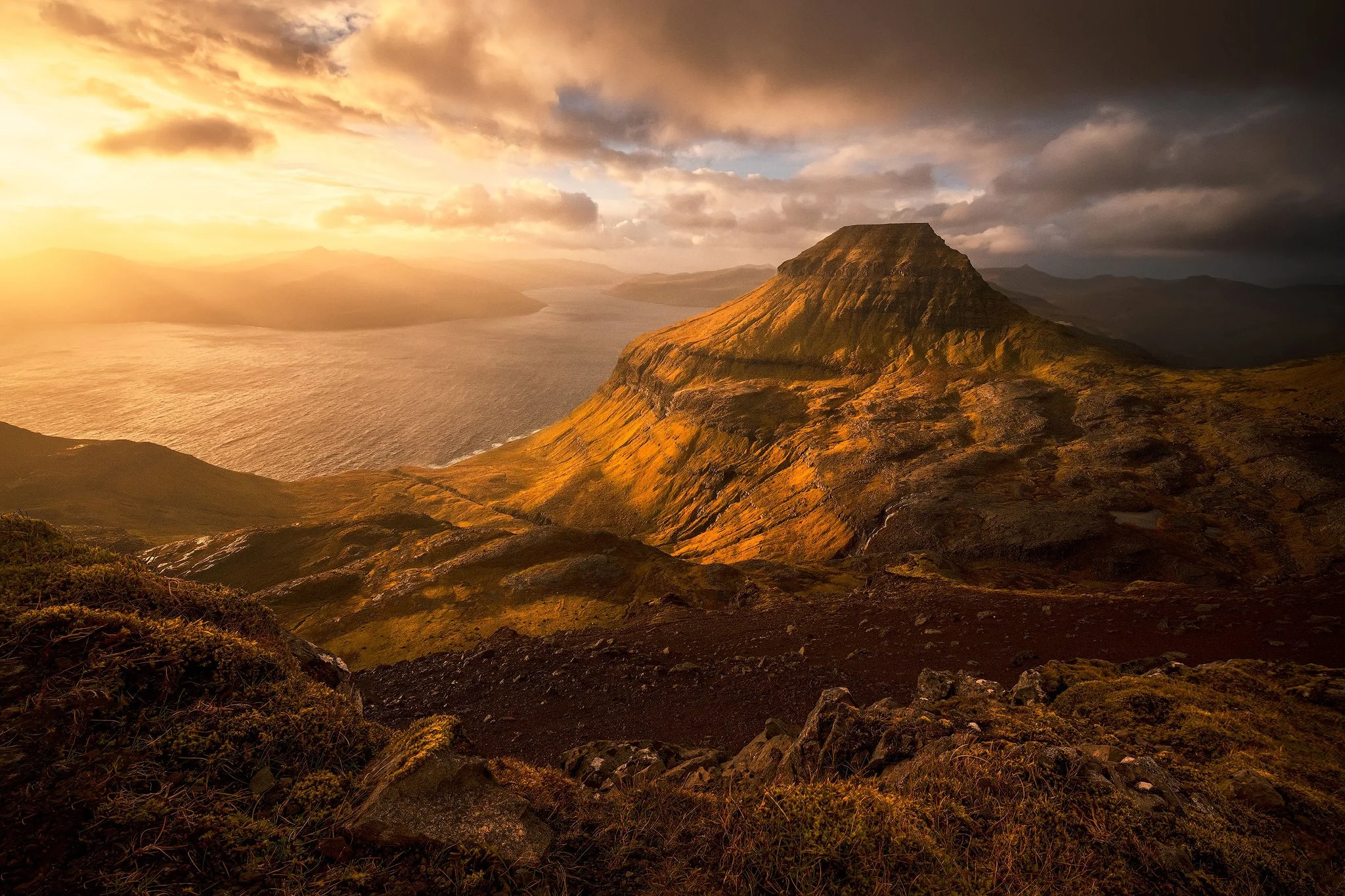
While this image looks rather peaceful, i was battling ferocious winds for most of that gorgeous sunset shoot. Worth it!
The weather — and why it makes the Faroes
Let me be blunt: the Faroes have some of the most brutal weather I've encountered anywhere, and I've been there in spring, autumn and deep winter, including a two-week trip during one of the snowiest spells the islands had seen in years. No matter when I've gone, I've had everything from completely impossible conditions — horizontal rain driven by ferocious wind, pouring for hours — to the most dramatic, gorgeous light imaginable. And the two are connected: that crazy light is exactly what you get when you endure conditions like those.
The islands sit in a remarkable position in the middle of the Atlantic, which gives them a unique microclimate: surprisingly mild in winter, cool in summer, and capable of savage wind and stormy rain in any season. There is no "safe" window. You go knowing the weather is both the gamble and the reward.
Here's the honest season-by-season:
Winter — brown tones with snow usually only on the higher peaks, which gives you beautiful contrast and separation. But snow rarely sticks: temperatures are often just warm enough that a snowfall lasts one, two, three days before the rain washes it away. If you want real Faroe winter, you can't plan it — you watch the forecast and go spontaneously. You might score magic; you might get green hills with rainbows and sun and muted colours.
Spring — the islands begin greening up. Fog can roll in thick enough to erase the view entirely.
Summer — fully green, and the puffins arrive. I'll be honest: I've never shot the Faroes in summer, so I won't pretend to be your puffin expert. Just know that thick fog can socket you in completely here too. Can someone invite me?
Autumn (my favourite — September/October) — the grasses turn golden, the weather gets even more dramatic, and you get those incredible god rays bursting through the clouds after a rainstorm, when the whole sky suddenly explodes in colour. That's what I come for. But autumn makes you earn it — be ready to take a real beating. These are not easy conditions.
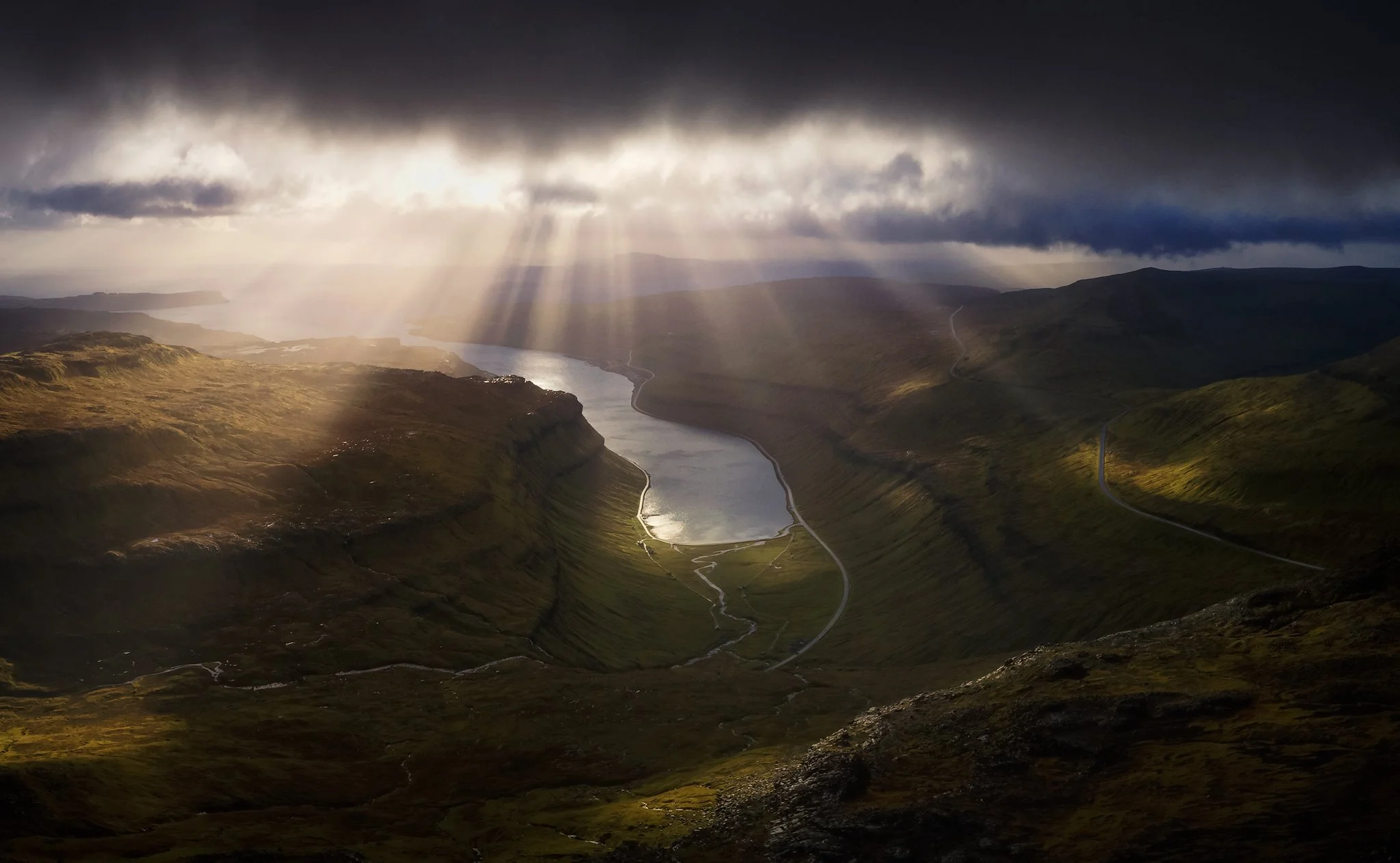
Prepare for it, or miss the moment
The practical lesson from all of this: bring proper clothing, or you'll miss the shot of the trip. The wind is relentless and the windchill is savage. It will rain, and when it pours it really pours — not funny amounts of water. Without the right layers and shells, you'll be drawn back to the warmth of the hotel — and the moment you're in the hotel is exactly when the dramatic light breaks. Dress so that staying out is never the hard choice.
Getting around
Getting around the Faroes is genuinely easy. There are plenty of rental car companies, and the islands are linked by an excellent network of tunnels — including sub-sea tunnels that charge a toll. You can pay per crossing or buy a flat-rate pass; if you're moving around a lot, the pass is worth it. Driving is safe and straightforward.
For the islands without a sub-sea tunnel connection, there's a wonderful quirk: helicopters. They're subsidised and cost little more than a taxi ride elsewhere — but there's a catch. They're mostly reserved for locals, goods and medical needs, and you can usually only book them one way. So you can fly out to an island, but not round-trip — you'll bus or drive back. It's a genuinely cool way to reach an outer island, just plan the return.
And one charming, real caution: the sheep. They famously outnumber the people here many times over, and they are everywhere — sunning themselves around blind bends, standing in the road, appearing out of nowhere before you can react, especially around places like Funningur. Drive slowly, don't get distracted, and don't speed (you shouldn't anywhere, but here you genuinely cannot always see them coming).
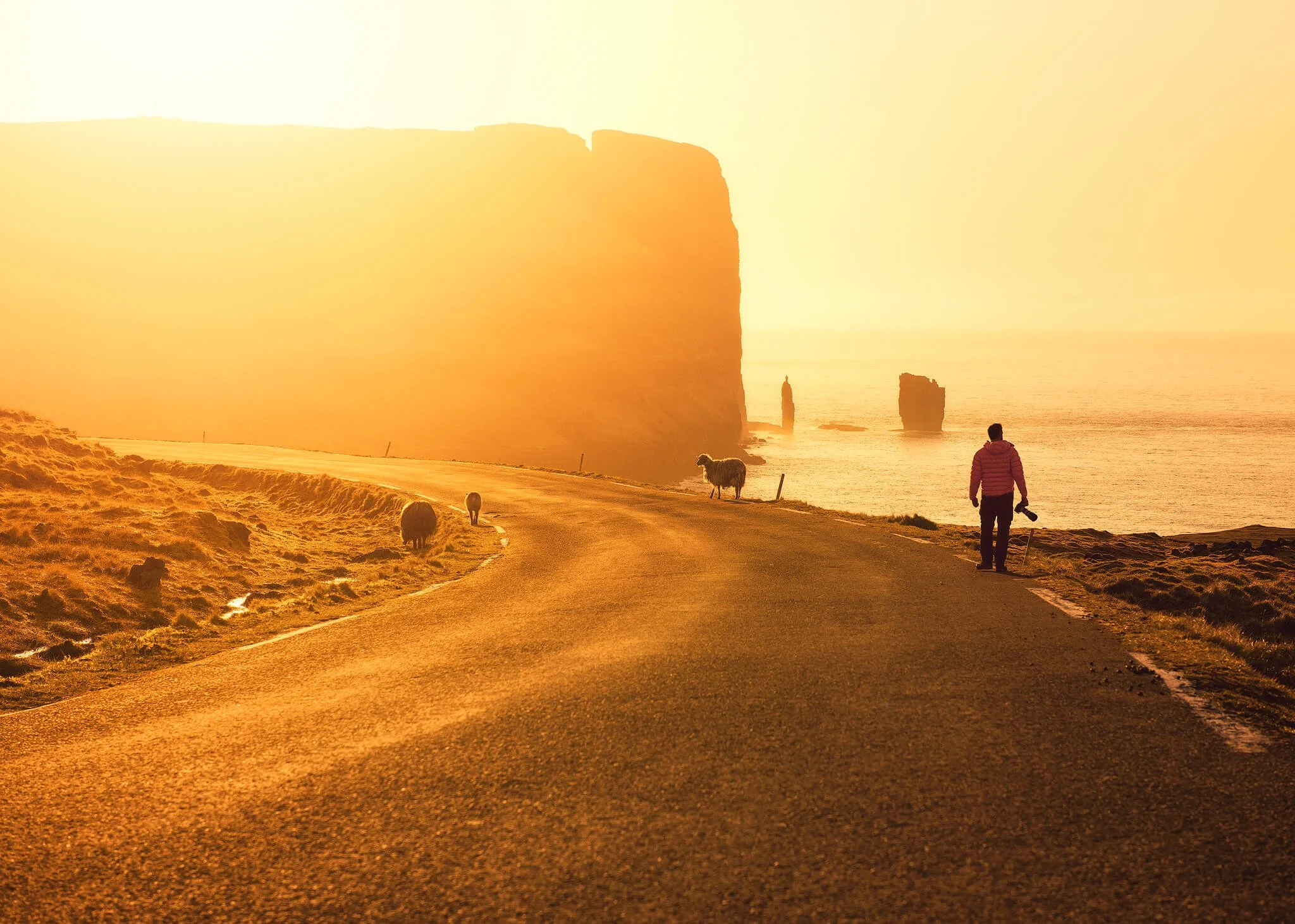
Remember i said you should be careful with sheep on the roads? Sometimes even with wild landscape photographers…
Where to base
Accommodation and Airbnbs are spread across the islands, but concentrated in and around the capital, Tórshavn. Because the islands are compact and well connected by tunnels, you don't need to keep relocating — a central base works well. With PhotoPills Expeditions we always stay at Hotel Føroyar in Tórshavn — a fantastic base with great views over the city and harbour, and an easy launch point for trips across the islands.
Respect the cliffs — this part matters
I want to be serious for a moment, because the Faroes are genuinely dangerous and the landscape doesn't forgive mistakes.
Always respect the cliffs and the nature. The single most important habit: judge the wind direction before you approach any edge. Never get close to a cliff edge with the wind at your back — a strong gust can push you straight over. Before committing to exposed viewpoints like Trælanípa, where you stand right at the precipice, spend real time with the weather and wind apps and make sure the wind isn't blowing you toward the sea.
I don't say this lightly. Accidents do happen on these islands every year and most of them could have been prevented!
Be patient, be humble, and when conditions are too dangerous, walk away. The light will come again. You only get one life.
A note on responsible photography
The Faroes are still relatively peaceful and undeveloped — that's part of what makes them special, and it's worth protecting. Stick to established paths, respect private land and the access rules (several spots now require fees or guides for good reason), don't trample fragile ground for "one step closer," park sensibly, and leave no trace. If we want these islands to stay as quiet and welcoming as they are, that respect is the price of admission.
Final thought
The Faroe Islands ask a lot of you — the weather, the wind, the patience, the willingness to be cold and wet and wait. But they give back more than almost anywhere I know: light and drama you simply cannot find in gentler places. Go prepared, go humble, and go ready to earn it.
I guide private photography trips to the Faroes — if you'd ever like to shoot these islands with me, get in touch.
Before you go, grab my free Field Method — the four checks I run before pressing the shutter on any landscape. It's free, and I'll also send Postcards from the Wild, field stories from my expeditions.
Keep going
Planning the gear for a trip like this? See my camera guide and lens guide for landscape photography. For another North Atlantic winter, read my Lofoten winter guide, and for the night sky, how to photograph the Aurora borealis.
Felix Inden is a landscape photographer and expedition leader based in Germany. PhotoPills Master. Multilingual guiding in German, English, and Spanish. He has photographed the Faroe Islands close to ten times across every season, and leads sold-out expeditions to Patagonia, the Faroe Islands, Lofoten, Iceland, and the Canadian Rockies.