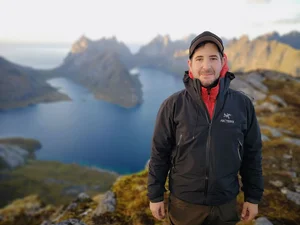
You Don't Need a Plane Ticket to Become a Better Landscape Photographer
I'm going to tell you the single most useful thing I know about getting better at landscape photography, and it has nothing to do with where you can afford to travel.
Over the years I've watched a lot of photographers work, in a lot of demanding places. And one thing has become completely clear to me: the photographers who consistently come home with their strongest work are the ones whose technique is already second nature. When the light does something unforgettable, they're not thinking about their camera. They're free to think only about the image.
That fluency doesn't appear the moment you arrive somewhere beautiful. You build it long before, on ordinary ground. Let me show you what I mean.
The excuse that keeps most photographers stuck
Most people believe they can't make extraordinary images because they can't get to extraordinary places. No money for flights, no time off, no way to reach the Arctic or Patagonia. So the dream gets shelved and the camera stays in the bag.
I understand it, because I lived it. For the first years of my career I was in Cologne with no budget to travel and a fierce desire to become a landscape photographer. I couldn't change my circumstances. So I changed my approach: I stopped waiting for the place and started working with what was in front of me.
Here is what I learned, and it's the core of everything I teach: you don't need an epic location to make an epic photograph. You need either something remarkable inside the ordinary, or something ordinary lit by remarkable conditions. You can find a story to tell everywhere and at any point in time. But only if you developed the instinct to see these things. A decent view under a spectacular sky beats a spectacular view under a flat one, every single time. Conditions outrank location. Always.
And remarkable conditions happen everywhere. They happen on your street. They happen over the most photographed building in your city. Most people just aren't out there when they arrive.
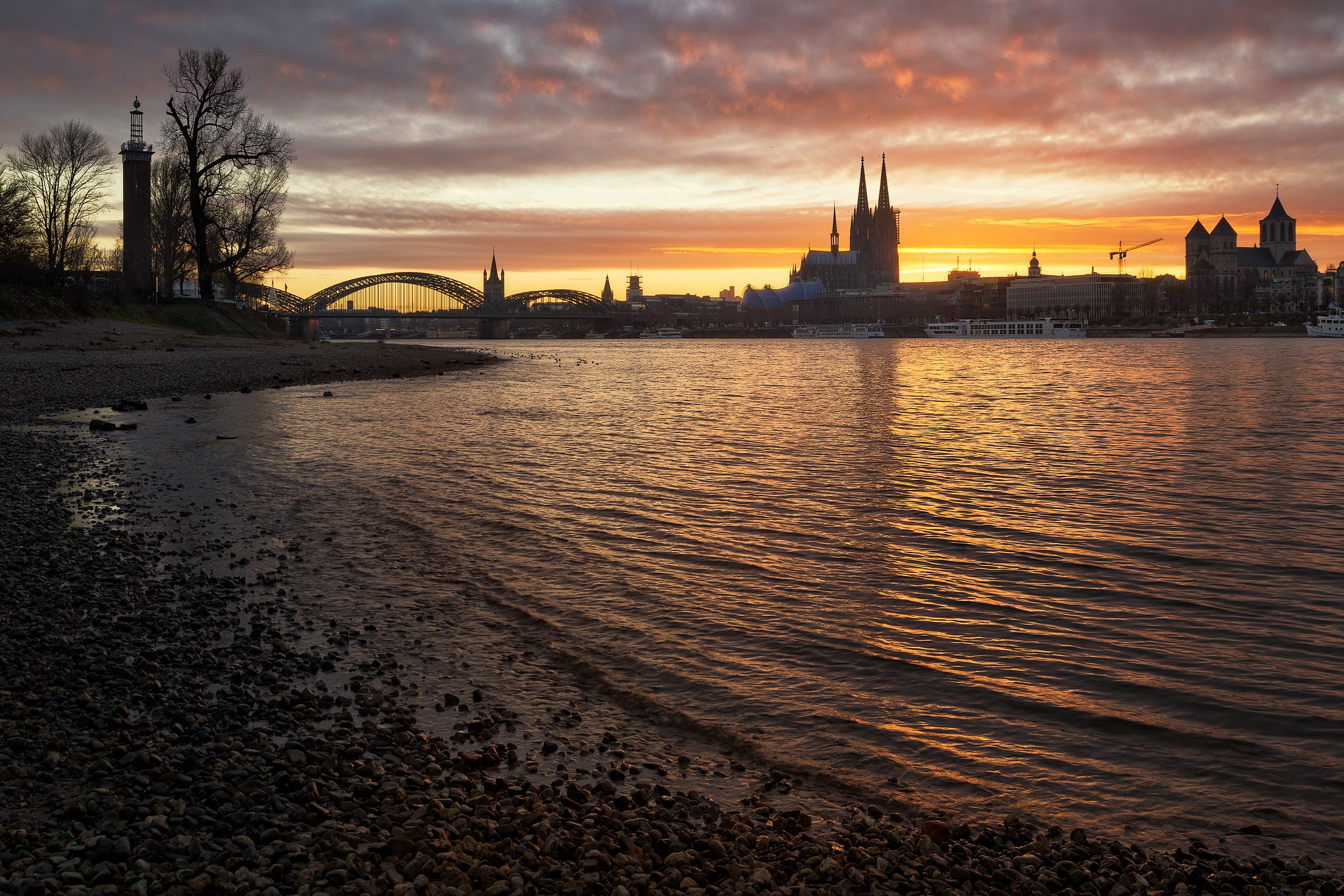
You can learn how to play with all kinds of foregrounds everywhere- including in your hometown.
I photographed the Cologne cathedral more times than I can count. Not because the building is rare, but because the light over it was never the same twice. That's where I learned to read a sky before it peaks, and to wait for the moment instead of hoping for it.
What the decisive moment demands
Here's the part almost nobody tells you, and it's the reason so many expensive journeys underdeliver.
You save for the trip of a lifetime. You fly somewhere staggering. And then it happens — a shaft of light tears through the storm, a wave detonates exactly where you wanted it, the whole scene ignites for ten or fifteen seconds.
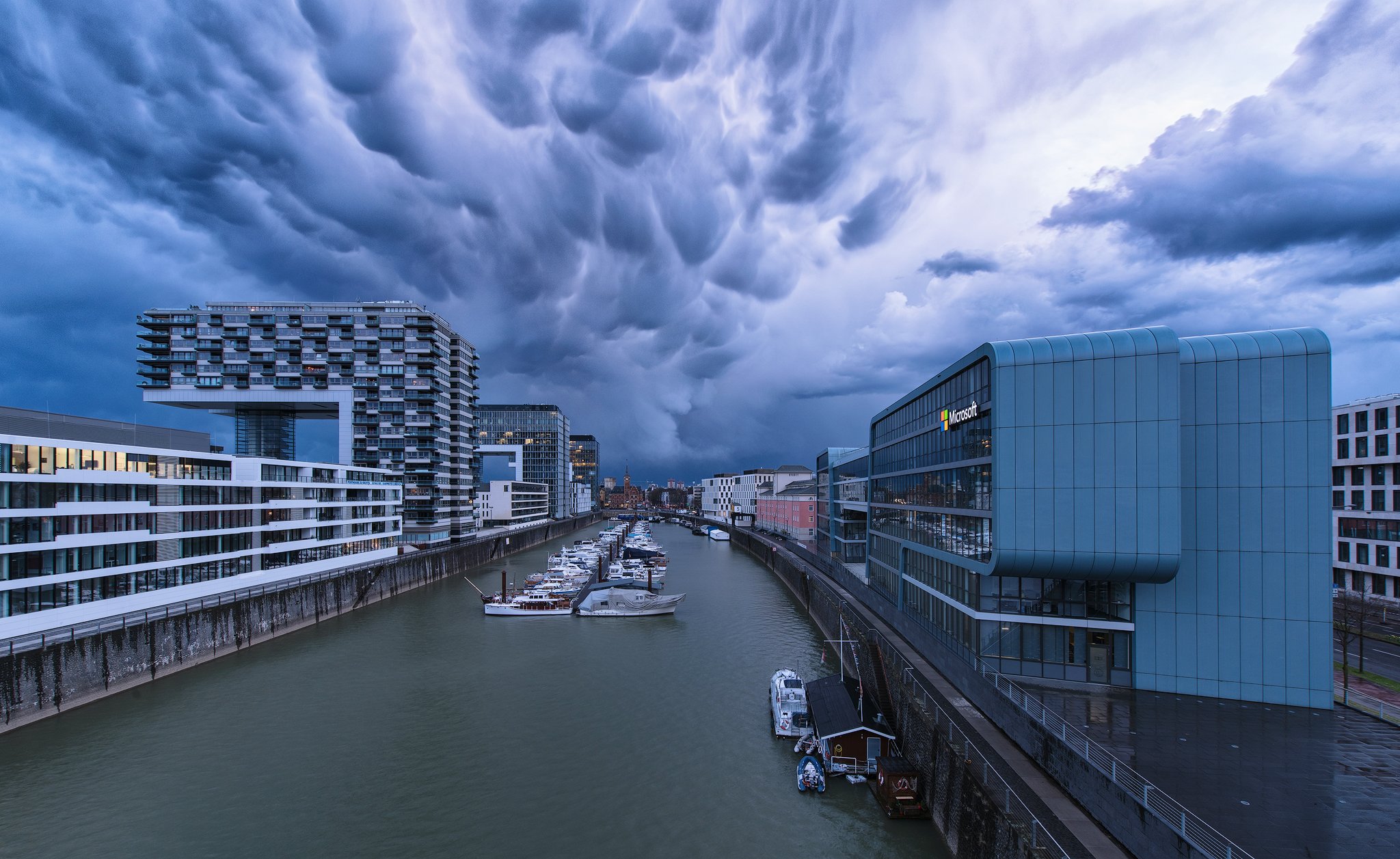
When i spotted thoses Mammatus clouds i had to run- moments like these where the composition comes together last only seconds…
In that window, there's no time to figure things out. If you're still hunting for the right settings, the moment is gone before you're ready — and the best light of the whole trip dissolves in front of you. I've watched it happen to talented people more than once.
The magic moment doesn't wait while you learn. It rewards the photographer who already has the technical side handled, so that when it arrives, their hands move on their own and their full attention stays on the scene.
That fluency is built before you ever leave. Home is your training ground — the place where the stakes are low and the repetitions are free.
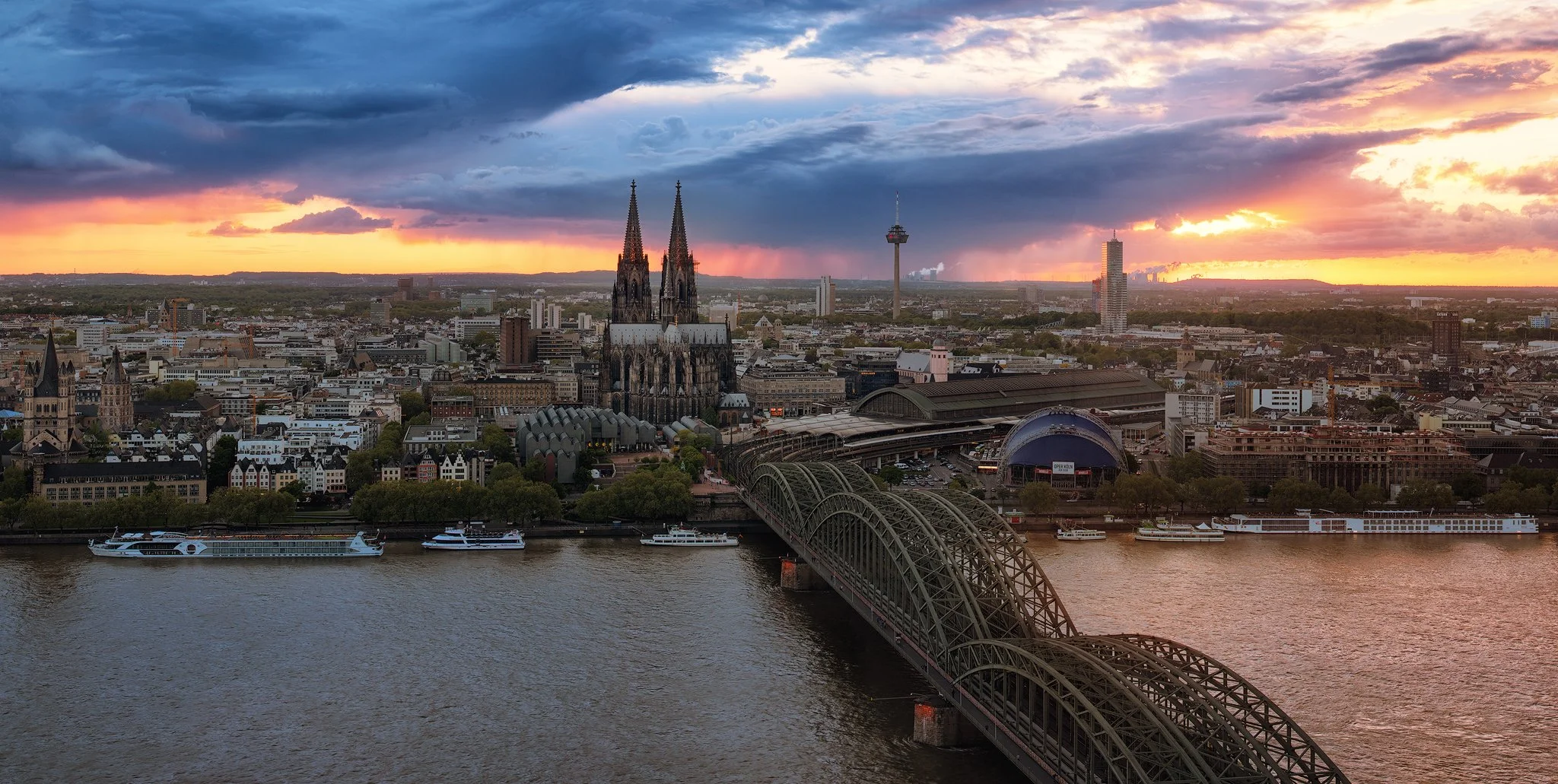
I taught myself to shoot and stitch panoramas here, in my own city, long before I needed that skill on a cliff edge in Norway.
Every instinct I rely on now — reading light before it arrives, building depth in my compositions, knowing my exposure by feel, working a panorama, holding steady through blue hour into full dark — I built all of it at home, on subjects most people walk straight past without a second look.
Train at home, so you're ready in the wild
By the time I stood at Múlafossur in the Faroe Islands, watching the waterfall suddenly go wild in the wind, I wasn't learning anymore. I was ready. The light came, and I didn't have to think — the technical part was automatic, so everything I had went into the moment itself. That readiness is the whole difference between bringing home a snapshot and bringing home a photograph.
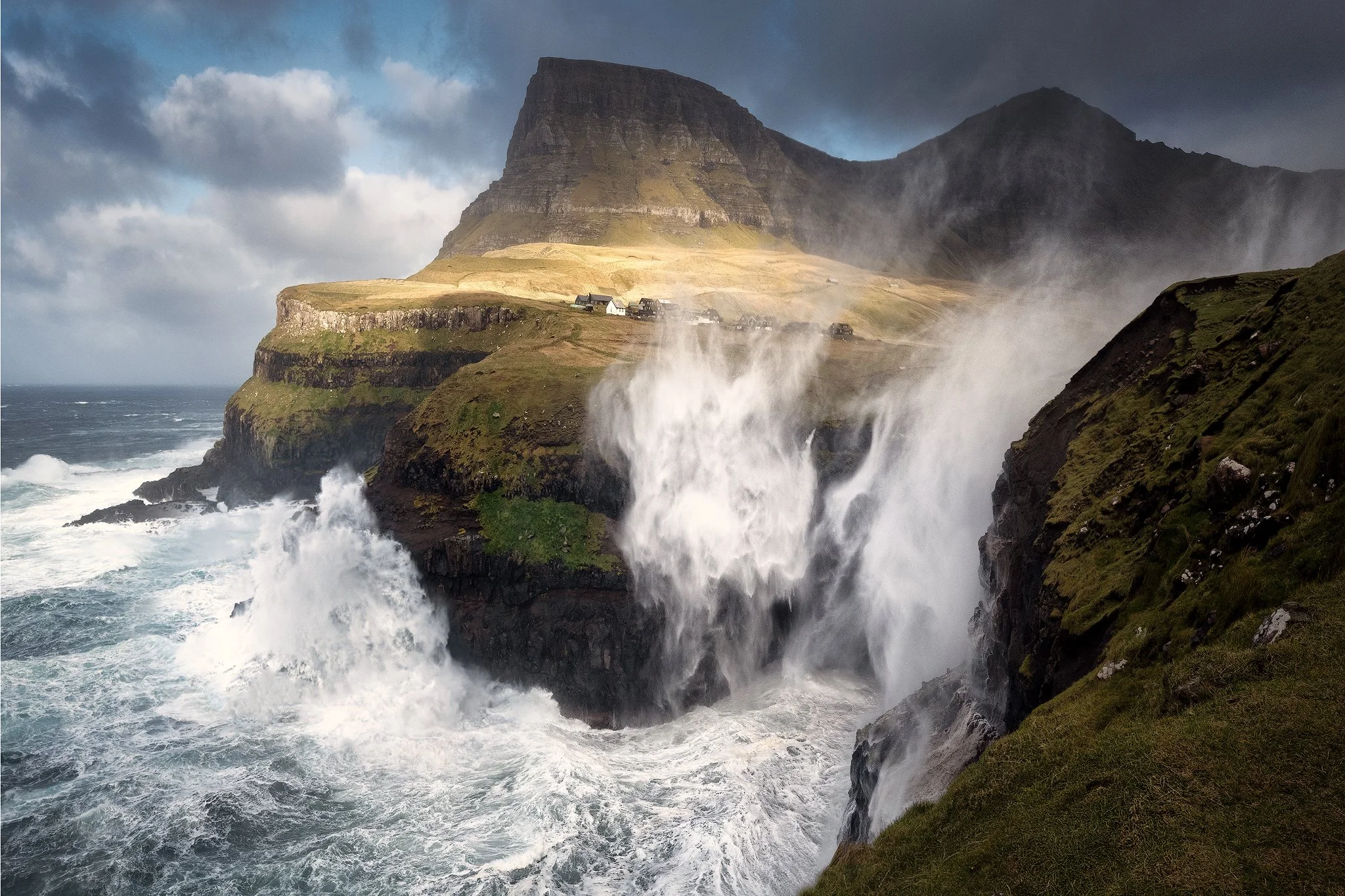
Múlafossur, Faroe Islands. When this moment came, I wasn't figuring out my camera — I was just there for it. That readiness was built at home, years before.
It did not come from a plane ticket. It came from hundreds unglamorous evenings on the Rhine, photographing a city I'd seen ten thousand times, waiting for it to do something new — and being there, ready, when it finally did. I actually miss those times!
The place that isn't there anymore
There's a second reason to keep your camera pointed at home, and it has nothing to do with skill.
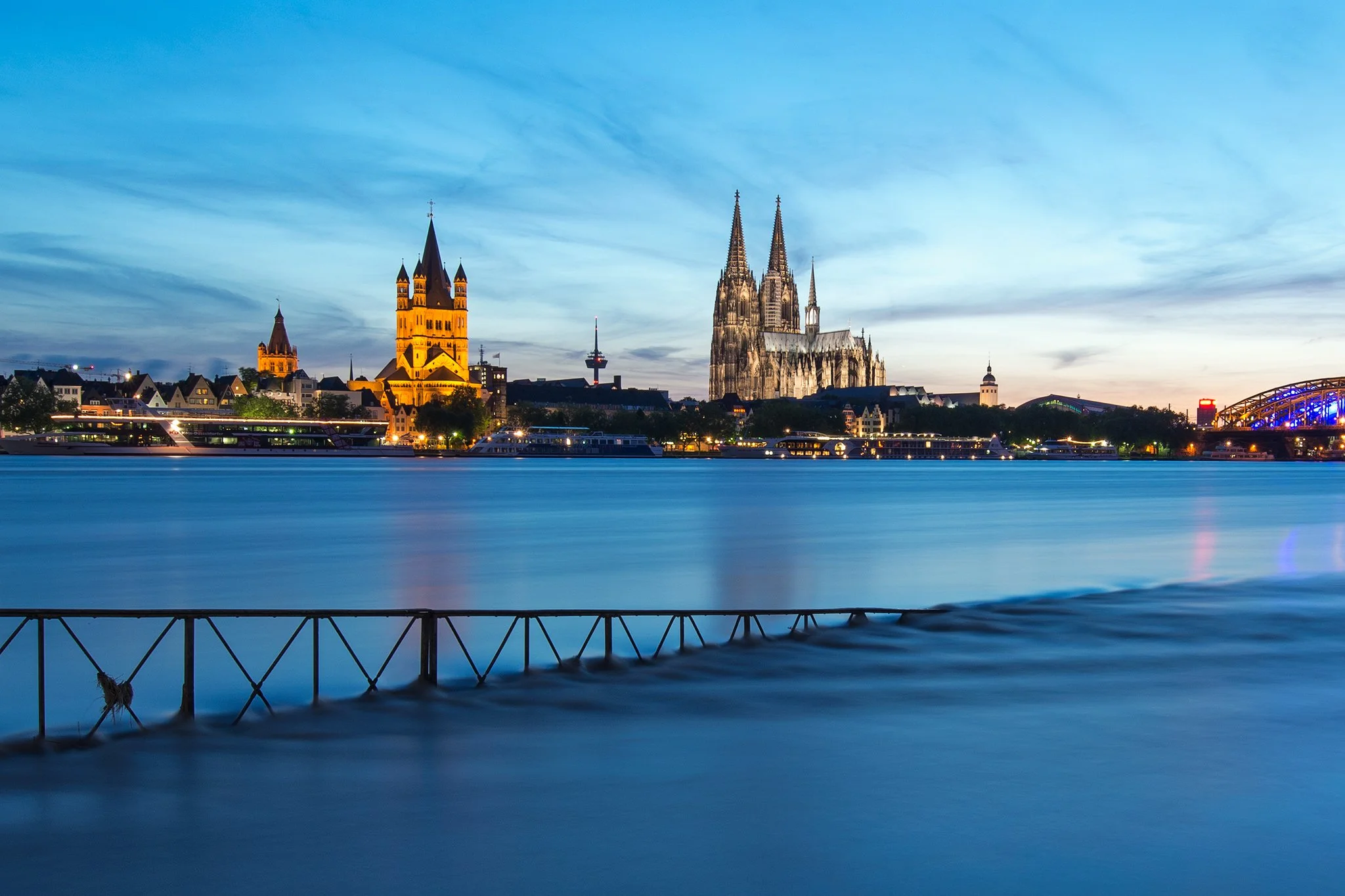
The opening image on this page — the flooded Rhine shore, a dreamy long exposure of several minutes — was shot from a spot that doesn't exist anymore. That stretch of riverbank was rebuilt a few years later into the Rheinboulevard. Different railing, different ground, different view entirely.
I didn't know that when I pressed the shutter. Nobody does, in the moment. But it happened anyway, the way it always does: a piece of the place you know changed, and the only thing left of it is whatever you bothered to photograph while it was still there.
Epic locations change too — Kirkjufell (iconic peak in Iceland) got a railing and a viewing platform, and the ideal compositions are gone for good. The difference is that ten thousand photographers had already shot Kirkjufell before it changed, so the "before" is safe, documented from every angle, impossible to lose. Nobody was doing that for your riverbank. If you weren't standing there with a camera, that version of home is just gone, with nothing to show it ever looked that way.
Which means every session on local ground is quietly doing two jobs at once. You're training your eye. And you might be the only record a specific version of your city ever gets.
That's a second reason to go out today instead of waiting for the next trip. The photograph you don't take now is a version of home that nobody gets to see later.
So here's what I want you to take from this, and it's the most practical advice I can give:
Stop waiting for the place. Go photograph what's near you — the unremarkable street, the local hill, the same tree in every kind of weather — and treat every session as training for the day the extraordinary arrives. Learn your camera until it disappears in your hands. Learn to read your local sky. Learn to wait. Do that, and the next time real magic unfolds in front of you, anywhere on earth, you won't miss it.
The nearest place worth photographing is closer than you think. It might be at the end of your street. Go find out what it does in the right light — before it changes into something else.
Before I press the shutter anywhere in the world, I run through four quick checks. I've put all four into a free guide called The Field Method — you can grab it below.
Keep going — more from Stories from the Wild
If this resonated, here's where to go next:
12 Tips to Improve Your Landscape Photography — the practical habits that turn everyday shooting into real, visible progress.
Best Winter Photography Locations on the Lofoten Islands — a field-tested guide to the archipelago that shaped my whole journey, once you're ready to travel.
How to Photograph the Aurora Borealis — what I keep in mind to capture the northern lights, even with today's capable cameras.
Which Camera Should You Choose for Landscape Photography? — the models I recommend, and why this is the decision that matters least of all.