Nya-Evo Fjord 60-C Gen 4 Review: Old vs. New
Is this still the perfect backpack for landscape photography? I reviewed the original Fjord 60-C years ago, after buying it with my own money — and I never stopped using it. It's still going strong. Now NYA-EVO has released the Gen 4, and after years of me carrying their bag around the world they sent the new version over. I took it to Patagonia for three weeks and used it for all my photography there. This is my honest comparison: what actually changed, what didn't, and whether you need it.
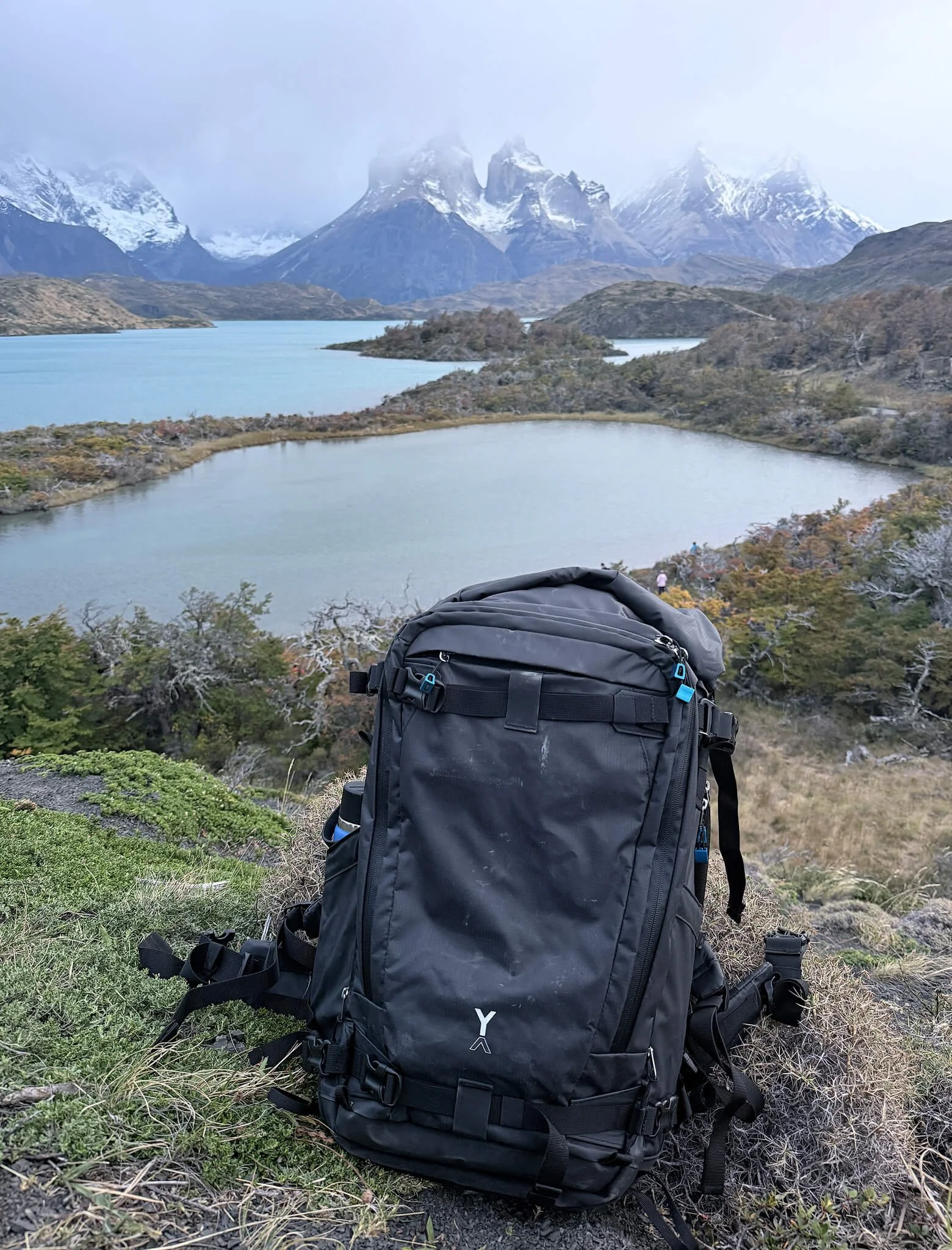
The Fjord 60-C Gen 4 on its first real test: three weeks of daily use in Patagonia.
The short answer
If you own the original (or any earlier version) and it's still working: you don't need to upgrade. Mine survived years of Lofoten winters, Faroe rain and airport abuse — and the build is so strong that I could easily keep using it for years to come. Nothing about the Gen 4 makes the old bag feel obsolete.
If you're buying a Fjord 60-C today: get the Gen 4 without hesitation. The improvements are real, they're exactly in the places where the original had its small weaknesses, and you profit from all of them at once.
That's the whole verdict. The rest of this article is the reasoning — and an update of my original review, which stays true in all the important points.
They fixed my complaint
When I reviewed the original, my main criticism was this: the collapsible upper compartment was a little too small to carry a full winter overnight kit. I wrote back then that it would need to be bigger.
The Gen 4 has a taller roll-top with two liters of extra space, and the roll-top zip has been repositioned so it matches the main rear opening. In Patagonia this was the change I felt most on ordinary days: warm layers, food for the day and a rain shell went in and out of the top without the fiddling I knew from the original. The bag now expands in three stages — 44L compact, 52L standard, 60L expedition — plus those extra two liters up top.
Does that mean it now swallows a complete winter camping kit with a thick down sleeping bag, insulated mat and tent? No — and I'll get to that boundary further down, because it hasn't moved. But the everyday version of my old complaint is gone.
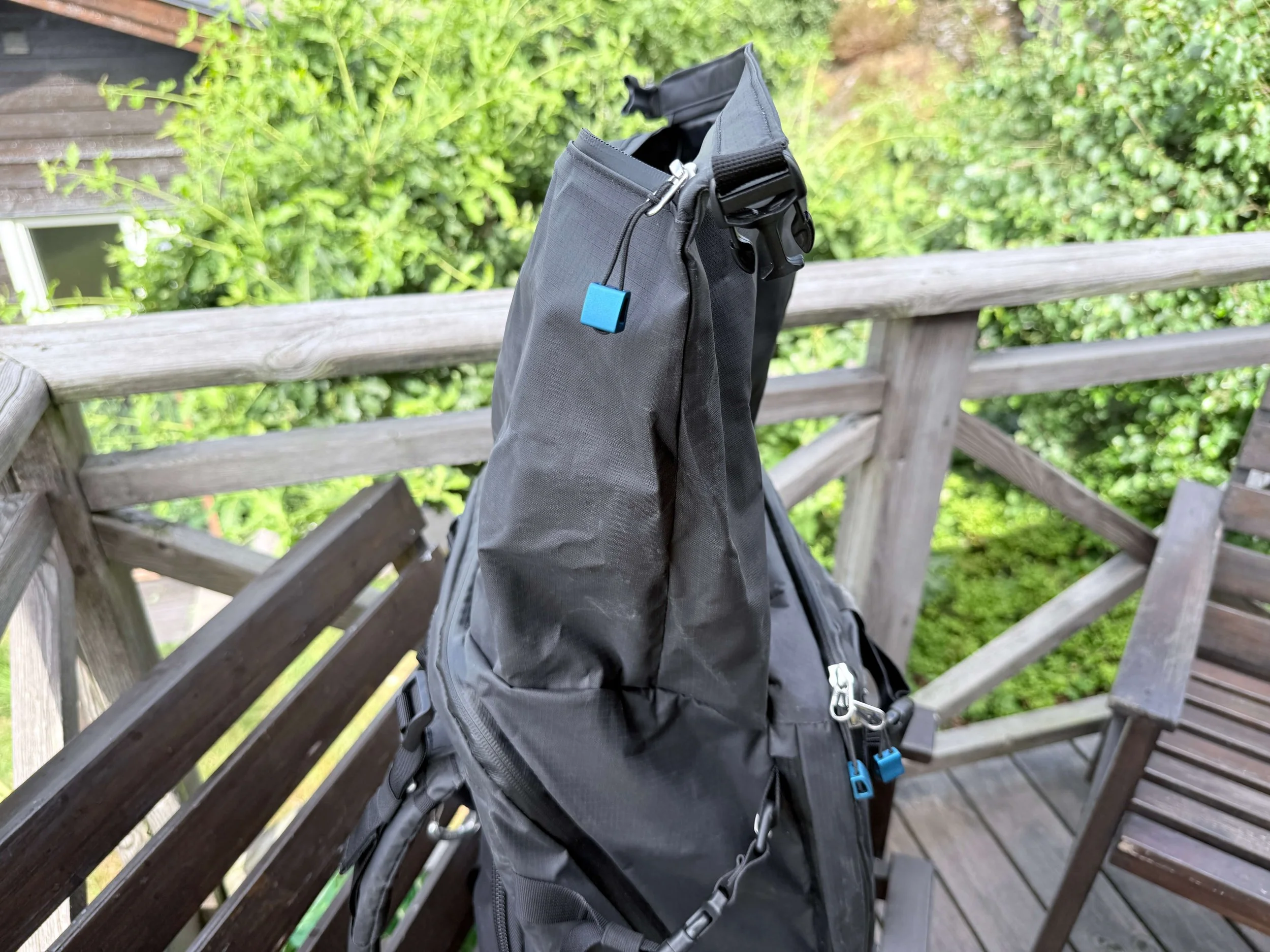
"The taller roll-top — the fix to the one complaint I had about the original.
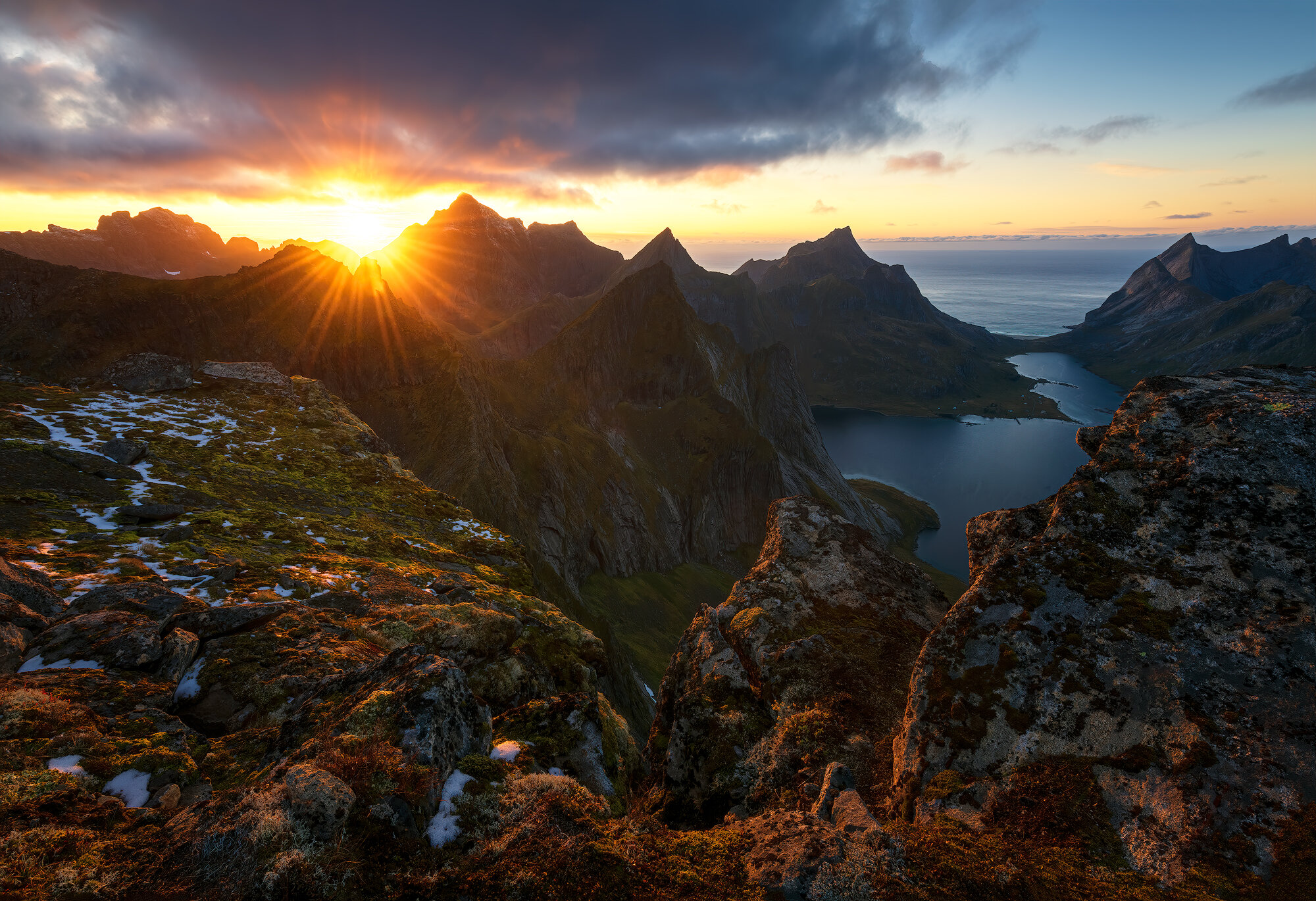
To reach amazing views like this one here, we will always have to carry our gear out and gain some elevation!
The changes that matter in the field
I'll be honest about which of the Gen 4 changes I actually noticed during three weeks of daily use in Patagonia and which ones I barely touched.
The taller side pockets are the sleeper upgrade. The original already had proper fabric side pockets instead of the flimsy nets most photo backpacks use — I praised that in my first review. The Gen 4 pockets are taller and expand further, and this is where I felt the difference daily. A tripod sits deeper and more secure. And it's not just tripods: I regularly carry lighting stands and light formers when a shoot calls for it, and the new pockets handle that kind of awkward long gear far better than the originals did. If you carry anything long and clumsy on the outside of your bag, this alone justifies choosing the Gen 4 over old stock.
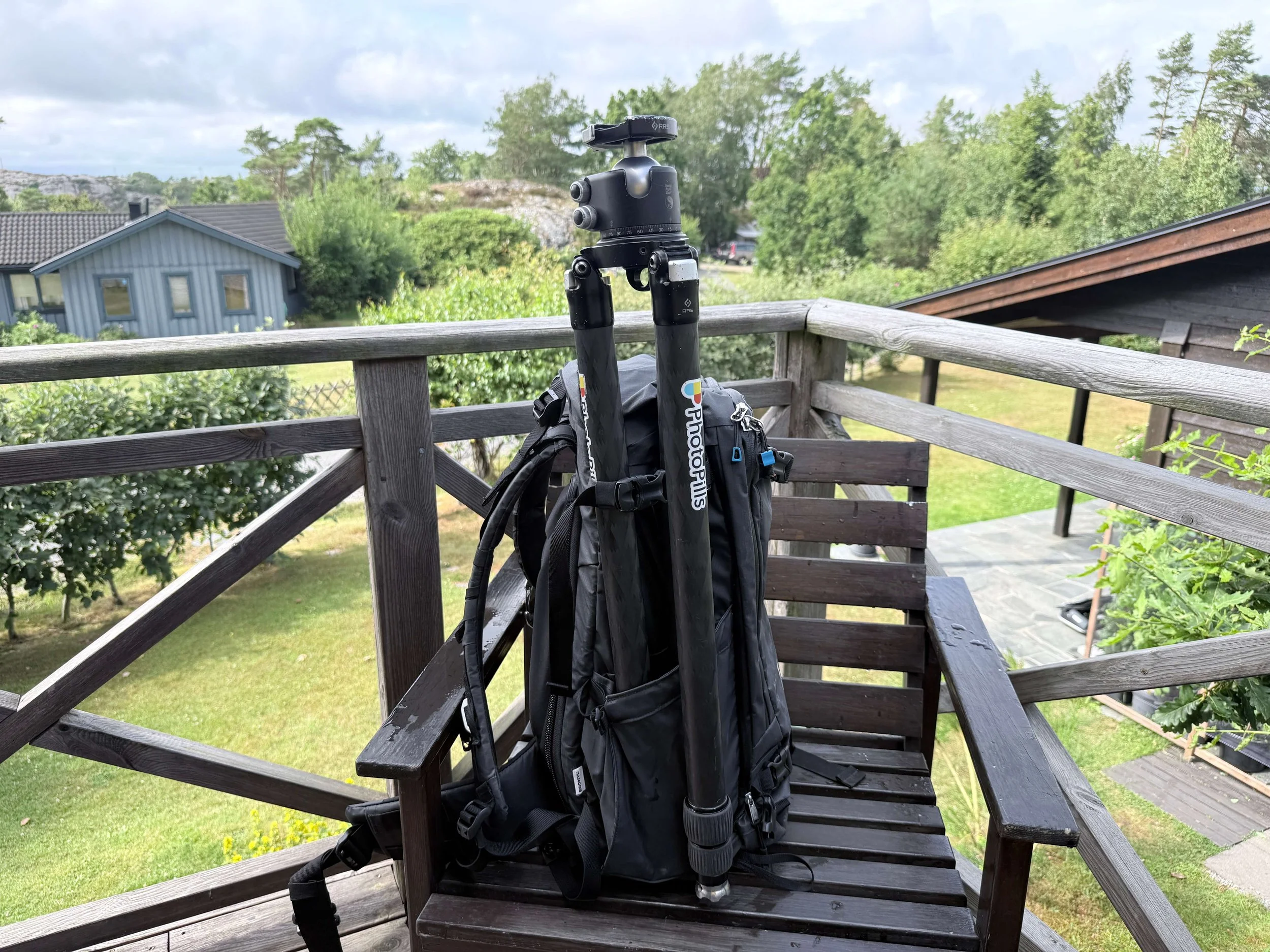
The taller side pockets swallow tripods and lighting stands noticeably deeper than the originals.
The isolated attachment straps solve a real annoyance. On the original, opening the bag with a tripod strapped to it meant the tripod shifted around. The Gen 4 separates the side and front attachment straps from the access points, so the tripod stays put while you get to your gear. A small thing on paper; in wind on a ridge, not small at all.
The new inner lining is nicer than it sounds. A soft, smooth mid-grey nylon lining doesn't read like a headline feature, but packing and unpacking gear several times a day for three weeks, you notice it — and the lighter grey makes it easier to find small items in low light than the darker interior of my original.
What I haven't used: the removable shoulder straps. This is the marquee feature of the Gen 4 launch — the straps come off completely and can be swapped for a new curved, lower-profile version. In three weeks I never felt the need. The standard straps fit me, and mid-trip strap swapping is not part of my reality so far — though I can imagine the replaceability paying off years down the road if a strap ever wears out. To be fair about who this is for: the curved straps are shorter, narrower and shaped for smaller torsos and female body types, and the removability also means a damaged strap can be replaced instead of retiring the bag. Good engineering — just not the reason to buy this pack. The pockets and the roll-top are.
There are also PD clips on the shoulder straps now for quick attachments, and the shell is the same recycled ECONYL 210 denier ripstop as always. It comes in Graphite Black, Pine Green and Midnight Blue.
What hasn't changed — and is still true
Everything that made me stop looking for alternatives back then survived the generation jump. I tested the original for years; the Gen 4 confirmed all of it in Patagonia.
Carry-on is still the superpower. The C in Fjord 60-C stands for carry-on, and it still delivers. My typical flying load — Nikon Z8 with the 14-24 f/2.8 attached, the 24-120 f/4, the 70-200 f/2.8, teleconverter, a DJI Mavic 4 Pro with a stack of batteries, laptop, drives, chargers — lands around 15 kilograms. That's roughly double what most airlines allow in the cabin, which is exactly why the bag's ability to look unremarkable matters. Collapsed into its compact mode, it draws no attention at the gate and fits the overhead compartments of small aircraft — my original even fit the notoriously tight bins of a Bombardier CRJ900. The Gen 4 behaved identically on the way to and from Patagonia. I would never check camera gear as hold luggage, and this bag remains the best answer to that problem I've found.

The NYA EVO Fjord 60- C had a snug fit even in the smallish compartments of a Bombardier CRJ900
Rain performance is still excellent. My original sat through near gale-force Lofoten rain and stayed dry inside without the rain cover; the cover exists for the truly biblical days. The Gen 4 got its share of Patagonian weather and behaved the same. Waterproof insulated bottom, sealed zippers — you can drop it in mud and not think about it.
The carrying system is still the best I've used on a photo backpack — and still not a hiking backpack. I can walk for hours in steep terrain with a full load and no back pain, which I can't say about any other photography bag I've owned. But the honest boundary from my original review hasn't moved: for multiday hikes with tent, food, cooking gear and a winter sleeping setup, I still switch to a dedicated hiking backpack. That's not what the Fjord 60-C is for, and pretending otherwise would be exactly the kind of review I don't write. In Patagonia the split was natural: Gen 4 for every photography day, the hiking pack for the overnight missions.
The RCI camera inserts are unchanged in concept and still excellent — sturdy, well made, and the modular drop-in system is what makes the bag adapt from day pack to full expedition load.
Updated pros and cons
PRO:
The two problems I had with the original — the tight top compartment and shifting tripod straps — are both fixed
Taller, more expandable side pockets carry tripods, lighting stands and light formers noticeably better
Carrying system still allows heavy loads for hours without back pain
Still invisible as an overloaded carry-on; still fits small aircraft overhead bins
Fully rainproof in real weather even without the cover
All accessories included from the start; sturdy, high-quality RCI inserts
Recycled ECONYL construction, now with a nicer interior lining
CONTRA:
Still not big enough for a full winter overnight kit — the boundary to a real hiking backpack remains (and honestly, that's the right design choice)
The removable strap system adds options I haven't needed yet — though the ability to replace a worn strap someday is a quiet plus, and smaller-framed photographers will value the curved option more than I do
The many configuration options can overwhelm at first; still a luxury problem
I'd still love more color variation
Conclusion
The original Fjord 60-C ended my search for a landscape photography backpack years ago. The Gen 4 didn't restart that search — it just confirmed the decision. NYA-EVO improved the bag exactly where long-term users felt the friction, and left everything alone that already worked.
So: original owners, keep hiking — after all these years mine shows no sign of giving up, and that durability is its own review. New buyers, the Gen 4 is the version to get. And NYA-EVO, since you're reading this like everyone else: more colors. I'm still waiting.
Frequently asked questions
Should I upgrade from the original Fjord 60-C to the Gen 4?
If your original is still working, no. Mine has survived years of Lofoten winters, Faroe rain and airport abuse and shows no sign of giving up. The Gen 4's improvements are real, but nothing about them makes the old bag obsolete. If you're buying a Fjord 60-C for the first time today, get the Gen 4 — you profit from all the refinements at once.
What actually changed in the Fjord 60-C Gen 4?
The changes I noticed in daily use: a taller roll-top with two liters of extra space and a repositioned zip, taller side pockets with more expansion that carry tripods and lighting stands better, and isolated attachment straps so a mounted tripod stays put while you access your gear. The shoulder straps are now completely removable and can be swapped for a curved, lower-profile version. The shell is the same recycled ECONYL 210 denier ripstop as before.
Is the Fjord 60-C Gen 4 carry-on compatible?
Yes — the C stands for carry-on, and it remains the bag's superpower. Collapsed into compact mode it looks unremarkable at the gate even with around 15 kilograms inside, and it fits the overhead compartments of small aircraft; my original even fit a Bombardier CRJ900's notoriously tight bins.
Is the Fjord 60-C big enough for multiday hikes with camping gear?
Not for a full winter kit — and that boundary hasn't moved across generations. For overnight missions with tent, thick sleeping bag, mat, food and cooking gear, I still switch to a dedicated hiking backpack. The Fjord 60-C is the bag for full photography loads on long day hikes and for travel, and it's excellent at exactly that.
Field notes like these go out first by email. The gear verdicts, the routes, the light I chased to get them — subscribers to Postcards from the Wild read it while I'm still out there, long before it becomes an article. If you'd rather hear it from the field than from the archive, that's where to be.
Building out the rest of your setup? See my camera guide and lens guide. For where I actually carry it all, read my Faroe Islands photography guide, my Lofoten guide — and now my Patagonia autumn photography guide, where this Gen 4 earned its verdict.